What We Do
Learn About Us
Support Us
Barka Syed
Chuttiyan at Nani Ghar- Part 6: Build Your Own World
Chuttiyan at Nani Ghar- Part 6: Build Your Own World
Published
Wednesday, September 17, 2025
Author
Barka is a psychology student with a curious mind and a love for storytelling. Passionate about exploring human behavior, she blends her academic journey with content writing to share ideas that inspire and inform. Outside her studies, she finds peace in nature and joy in the company of animals.
Barka Syed
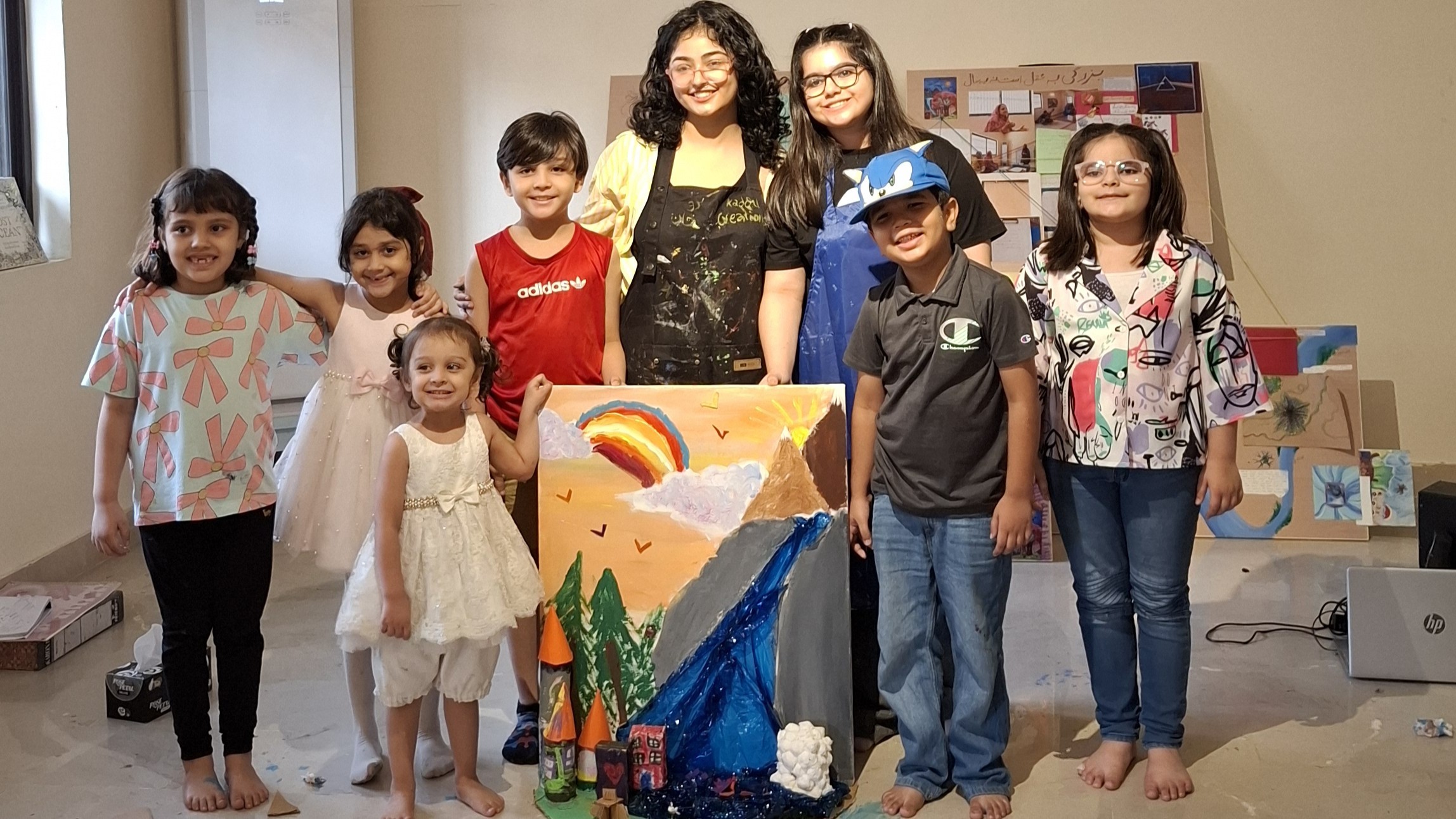
You remember that one iconic Cadbury Dairy Milk ad that made all of us hum “kitna maza aye re, agar duniya poori dairy milk ki banjaye re”? it wasn’t just a catchy jingle, it was a childhood wish. A world made of chocolate. A world where everything you loved was just… there. Unapologetically joyful, weird, fun, and delicious. That tiny wish to build a world of your own was the spark behind the grand finale of our summer camp; a day where imagination wasn’t just encouraged, it was celebrated, painted, glued, and brought to life.
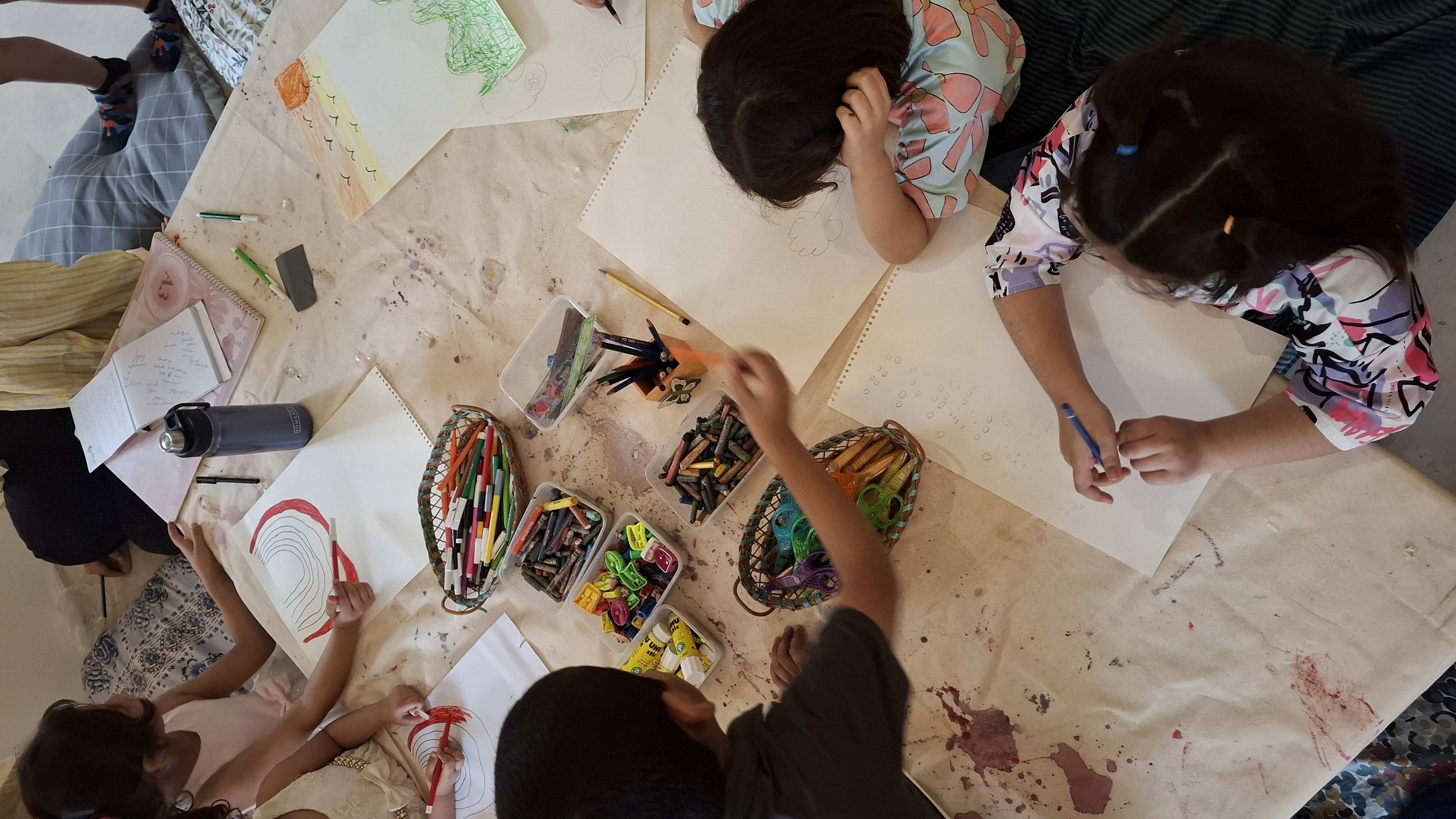
The theme was simple yet profound: create the world you’d want to live in, but instead of just talking about it, we gave the children a giant shared canvas and let them pour their ideas onto it. That was the beauty of the final activity. It wasn't just about dreaming big, it was about dreaming together. One giant shared canvas brought all their wild ideas into one beautiful, chaotic, imaginative universe.
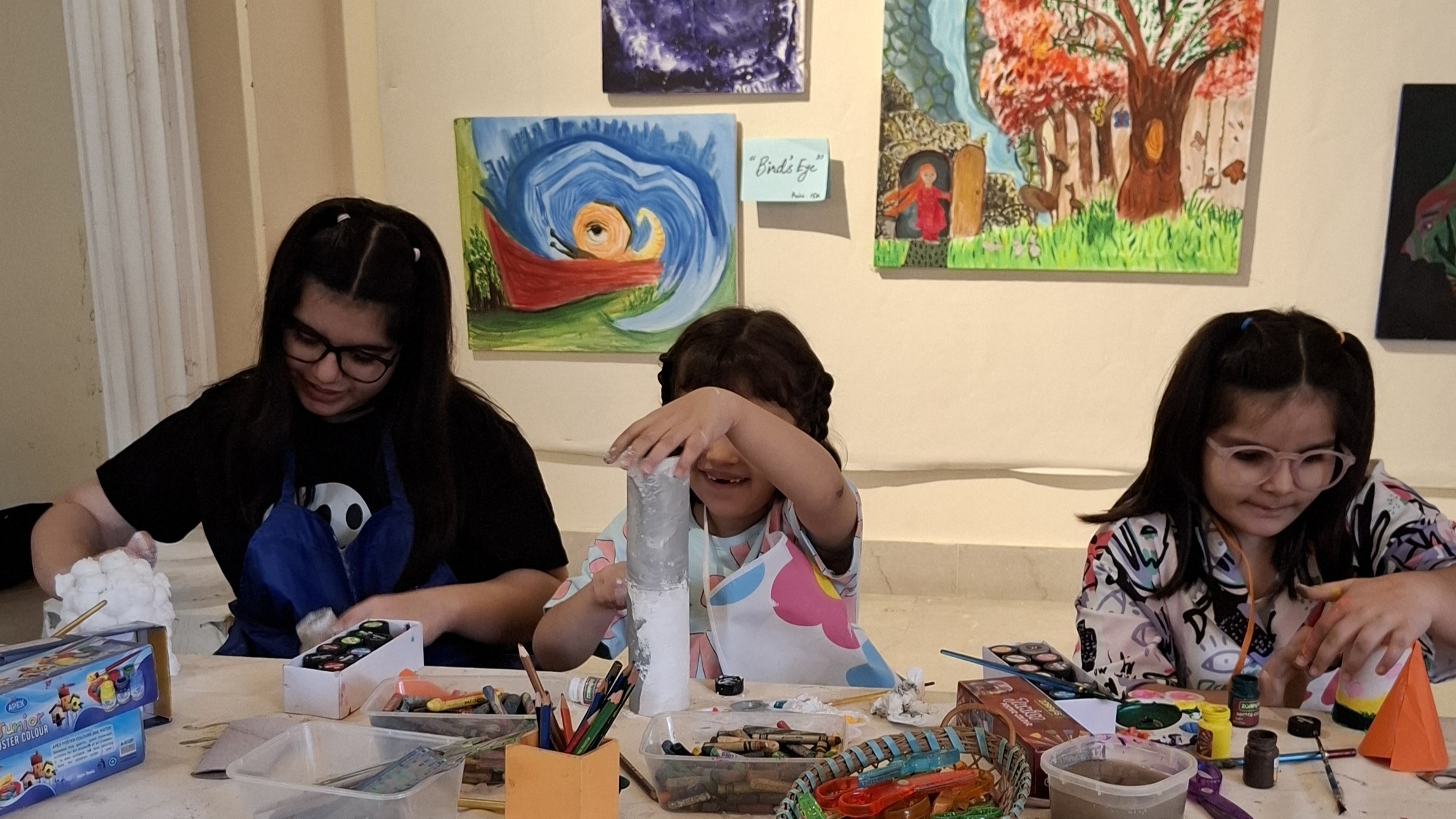
They crafted their dreamscapes with recycled materials, paints, fabric scraps, and things you’d never expect to become art. Juice boxes, toilet paper rolls, gloss paper, cotton, even candy wrappers; in their world, nothing was out of place. A toilet roll became a tower, a juice box became a house and the result? A magical land where everything made perfect sense. The scene slowly emerged, and it was breathtaking. On one side, juice box houses stood proudly with tiny windows drawn in crayon. Towering above them were long cylindrical buildings made from leftover toilet rolls (each child imagined living inside one). Beside this “Noddy Land” was a shimmering pond made from glossy blue paper reflecting paper-made fish and coral reefs bouncing around, adding life to the scene. High above, fluffy cotton candy clouds floated that didn’t just drift in the pink sky, it rained candy! And zooming around were flying rikshaws that sprayed fertilisers over the fields instead or spewing harmful smoke or gases, so wherever these rikshaws went, flowers and trees could grow. Their world wasn't just an ode to culture but was rooted in a genuine desire for a kinder planet.
Among all the flying rikshaws and cotton candy clouds, one detail stood out and left us smiling: the unmistakable presence of gol gappa stands at every corner of their world. No one asked for it, no adult prompted them but the children embedded a heartwarming local part of their culture into their imaginary utopia. It showed us that even in fantasy, they didn’t want to let go of home. By blending magic with cultural elements like traditional snacks, transport and even colors and patterns common in local life, they wove a narrative that celebrated belonging. Here, they were affirming that their world, their culture, their people, and their stories mattered just as much as anything else in the universe. In an increasingly fast world where cultural markers are fading with each generation, it was refreshing to see children insert small, meaningful bits of home into their fantasy worlds.
Research strongly emphasizes the role of imaginative and pretend play in early childhood development. It enhances their cognitive flexibility, problem-solving, and emotional resilience. This kind of play also supports executive functioning, helping children plan, adapt ideas and revise them collaboratively. It’s also deeply tied to empathy- when children imagine new perspectives or scenarios, they begin to understand feelings and thoughts outside their own. Additionally, metaphors like candy rain to represent happiness and flying rikshaws as freedom shows they were experimenting with symbolism, a foundational skill in both literacy and emotional expression.
As everything was made with recycled, humbled, everyday materials, the children turned limitations into liberation. These materials, free from the pressure of perfection allowed pure creativity to flow. Recycled art is open-ended and, in that openness, children feel safe to take risks, make mistakes, and collaborate without fear. The shared canvas became more than a fun activity. It became a happy place, a visual memory map of the summer camp filled with moment of laughter, teamwork, tiny disagreements, spontaneous storytelling and pure joy.
The final day reflected what the past weeks had built: confidence, creativity, connection. And isn’t that what a truly meaningful childhood should be made of?
-Written by Barka Syed
You remember that one iconic Cadbury Dairy Milk ad that made all of us hum “kitna maza aye re, agar duniya poori dairy milk ki banjaye re”? it wasn’t just a catchy jingle, it was a childhood wish. A world made of chocolate. A world where everything you loved was just… there. Unapologetically joyful, weird, fun, and delicious. That tiny wish to build a world of your own was the spark behind the grand finale of our summer camp; a day where imagination wasn’t just encouraged, it was celebrated, painted, glued, and brought to life.
The theme was simple yet profound: create the world you’d want to live in, but instead of just talking about it, we gave the children a giant shared canvas and let them pour their ideas onto it. That was the beauty of the final activity. It wasn't just about dreaming big, it was about dreaming together. One giant shared canvas brought all their wild ideas into one beautiful, chaotic, imaginative universe.
They crafted their dreamscapes with recycled materials, paints, fabric scraps, and things you’d never expect to become art. Juice boxes, toilet paper rolls, gloss paper, cotton, even candy wrappers; in their world, nothing was out of place. A toilet roll became a tower, a juice box became a house and the result? A magical land where everything made perfect sense. The scene slowly emerged, and it was breathtaking. On one side, juice box houses stood proudly with tiny windows drawn in crayon. Towering above them were long cylindrical buildings made from leftover toilet rolls (each child imagined living inside one). Beside this “Noddy Land” was a shimmering pond made from glossy blue paper reflecting paper-made fish and coral reefs bouncing around, adding life to the scene. High above, fluffy cotton candy clouds floated that didn’t just drift in the pink sky, it rained candy! And zooming around were flying rikshaws that sprayed fertilisers over the fields instead or spewing harmful smoke or gases, so wherever these rikshaws went, flowers and trees could grow. Their world wasn't just an ode to culture but was rooted in a genuine desire for a kinder planet.
Among all the flying rikshaws and cotton candy clouds, one detail stood out and left us smiling: the unmistakable presence of gol gappa stands at every corner of their world. No one asked for it, no adult prompted them but the children embedded a heartwarming local part of their culture into their imaginary utopia. It showed us that even in fantasy, they didn’t want to let go of home. By blending magic with cultural elements like traditional snacks, transport and even colors and patterns common in local life, they wove a narrative that celebrated belonging. Here, they were affirming that their world, their culture, their people, and their stories mattered just as much as anything else in the universe. In an increasingly fast world where cultural markers are fading with each generation, it was refreshing to see children insert small, meaningful bits of home into their fantasy worlds.
Research strongly emphasizes the role of imaginative and pretend play in early childhood development. It enhances their cognitive flexibility, problem-solving, and emotional resilience. This kind of play also supports executive functioning, helping children plan, adapt ideas and revise them collaboratively. It’s also deeply tied to empathy- when children imagine new perspectives or scenarios, they begin to understand feelings and thoughts outside their own. Additionally, metaphors like candy rain to represent happiness and flying rikshaws as freedom shows they were experimenting with symbolism, a foundational skill in both literacy and emotional expression.
As everything was made with recycled, humbled, everyday materials, the children turned limitations into liberation. These materials, free from the pressure of perfection allowed pure creativity to flow. Recycled art is open-ended and, in that openness, children feel safe to take risks, make mistakes, and collaborate without fear. The shared canvas became more than a fun activity. It became a happy place, a visual memory map of the summer camp filled with moment of laughter, teamwork, tiny disagreements, spontaneous storytelling and pure joy.
The final day reflected what the past weeks had built: confidence, creativity, connection. And isn’t that what a truly meaningful childhood should be made of?
-Written by Barka Syed



Comments
You may also like

Article
Pema Through My Eyes - As a Co-Facilitator
Barka Syed
Article
Chuttiyan at Nani Ghar- Part 5: Ghussa Zaruri Hai
Barka Syed
Article
Chuttiyan at Nani Ghar- Part 4: A Card to Yourself
Barka Syed