What We Do
Learn About Us
Support Us
Barka Syed
Chuttiyan at Nani Ghar- Part 5: Ghussa Zaruri Hai
Chuttiyan at Nani Ghar- Part 5: Ghussa Zaruri Hai
Published
Wednesday, September 17, 2025
Author
Barka is a psychology student with a curious mind and a love for storytelling. Passionate about exploring human behavior, she blends her academic journey with content writing to share ideas that inspire and inform. Outside her studies, she finds peace in nature and joy in the company of animals.
Barka Syed
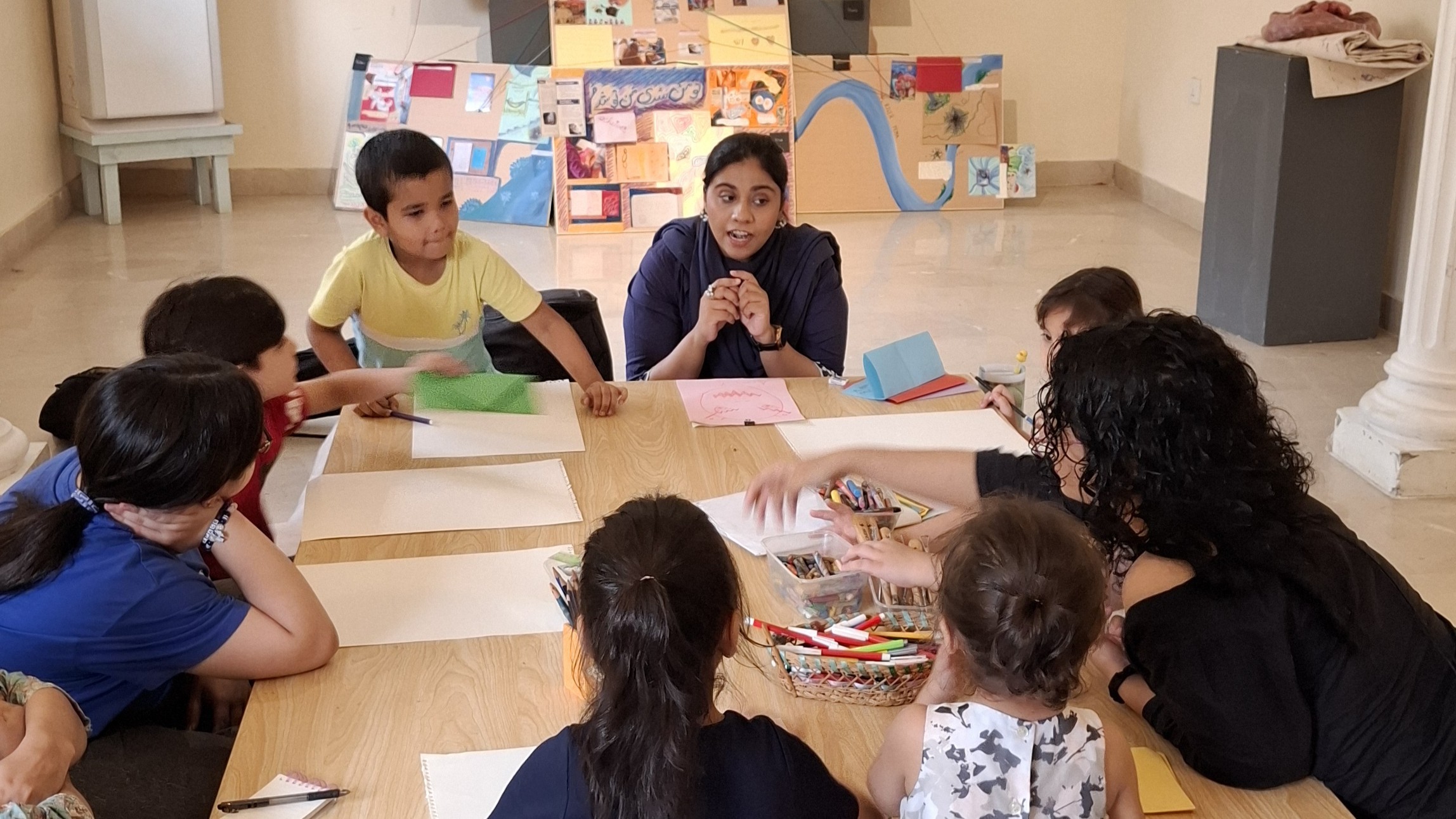
Some days leave a lasting impression on or hearts and day 5 at the summer camp was one of those. This was perhaps the most profound of all as we stepped into the deeper waters of what it means to be human. The focus of the day was something often misunderstood and even feared: Anger. This day was about learning that anger is not the enemy, it’s a message in disguise.
We began with a powerful conversation on self esteem and how it begins to form early in life. Children absorb more than just our words; they absorb or biases, reactions and attitudes. They notice when we focus more on the wrong than the right, and slowly, negative bias forms. This tendency to focus more on what’s bad than good isn’t just a habit it’s evolutionary. Or brains are wired to detect danger, which means negativity often sticks harder. But while this once kept us alive, today it can shrink a child’s self-worth before they even realize it. To counter this, the day began with a thoughtful, gentle activity: “A name poem”. Children were asked not to write their names but to choose a quality they see in themselves instead. “my name is kind, my name is brave, my name is Rutaba”- this was a powerful exercise in reclaiming identity. By associating the names with positive qualities, the children were reminded of who they are beyond labels and expectations. It sparked reflection, encouraged introspection of their inner world and helped them feel pride in their uniqueness.
From there, we transitioned to the core theme of the day which was anger. Miss Rutaba, the facilitator, introduced it as something not to be feared or rejected, but as something that wears a mask. Anger is a mask that hides hurt underneath. “when we’re sad, we meet anger” said one child. “anger is a monster that has many faces behind it” said another. These raw insights proved that children are not only capable of understanding emotions but also expressing them beautifully when given the chance.
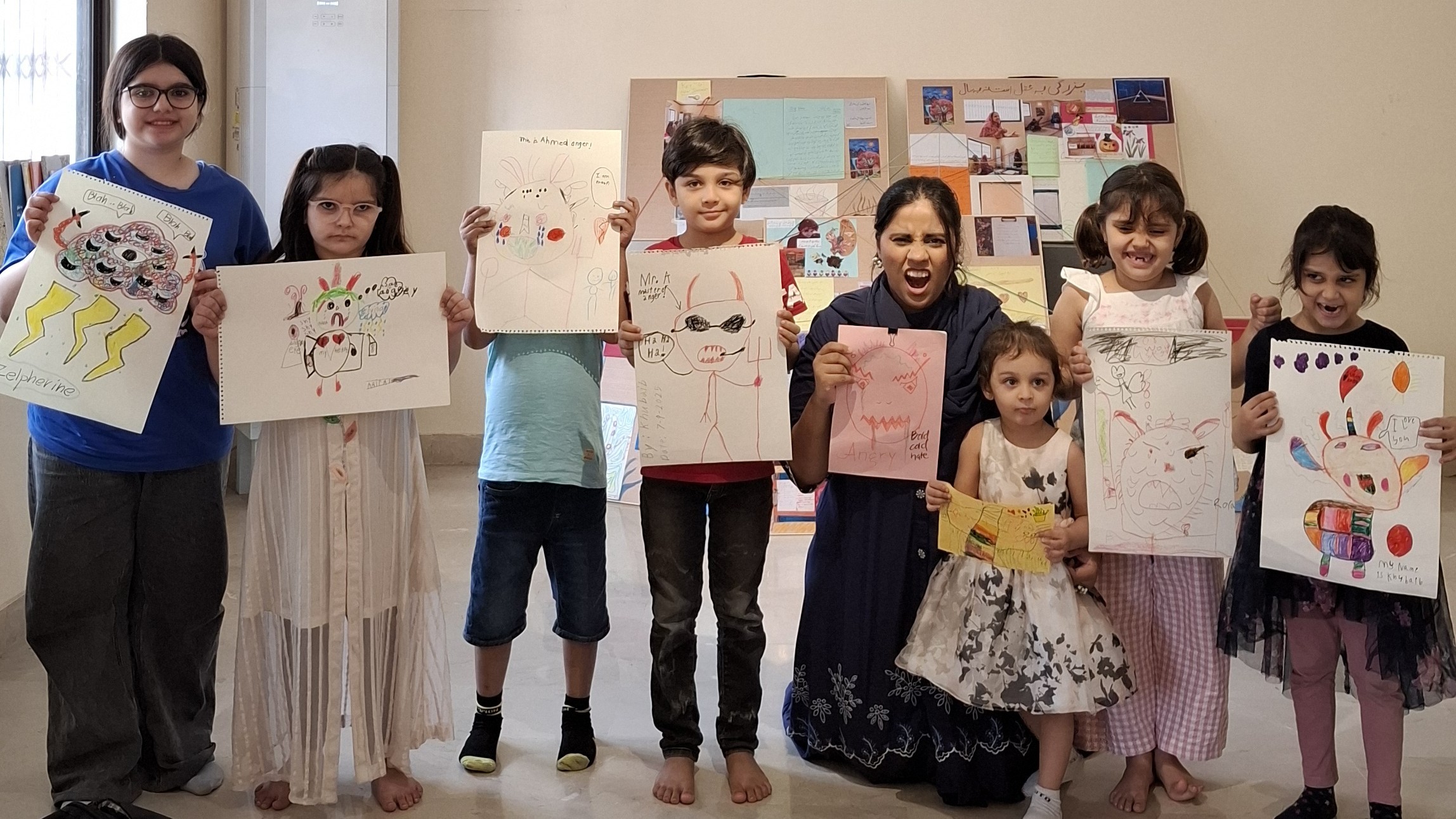
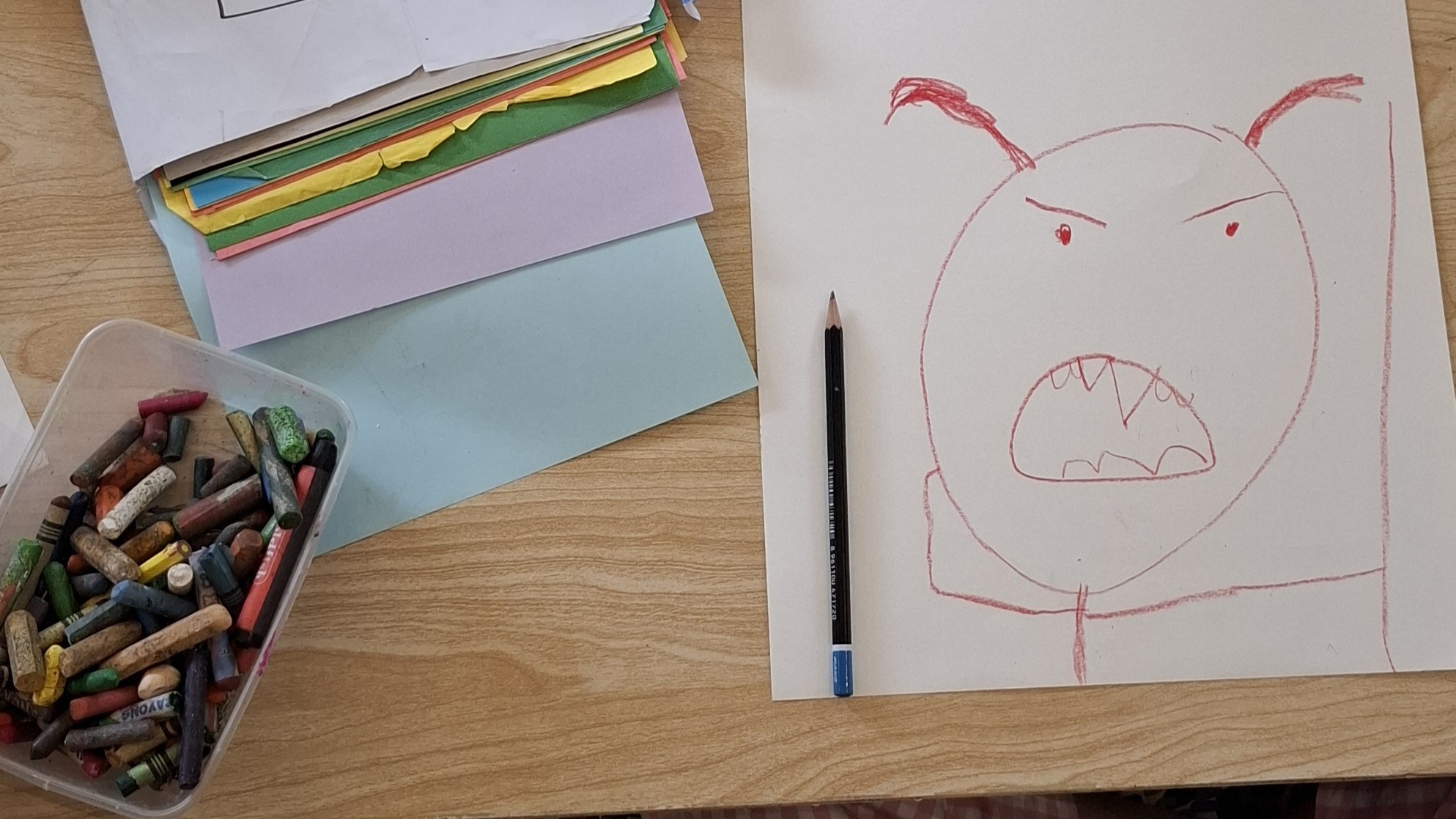
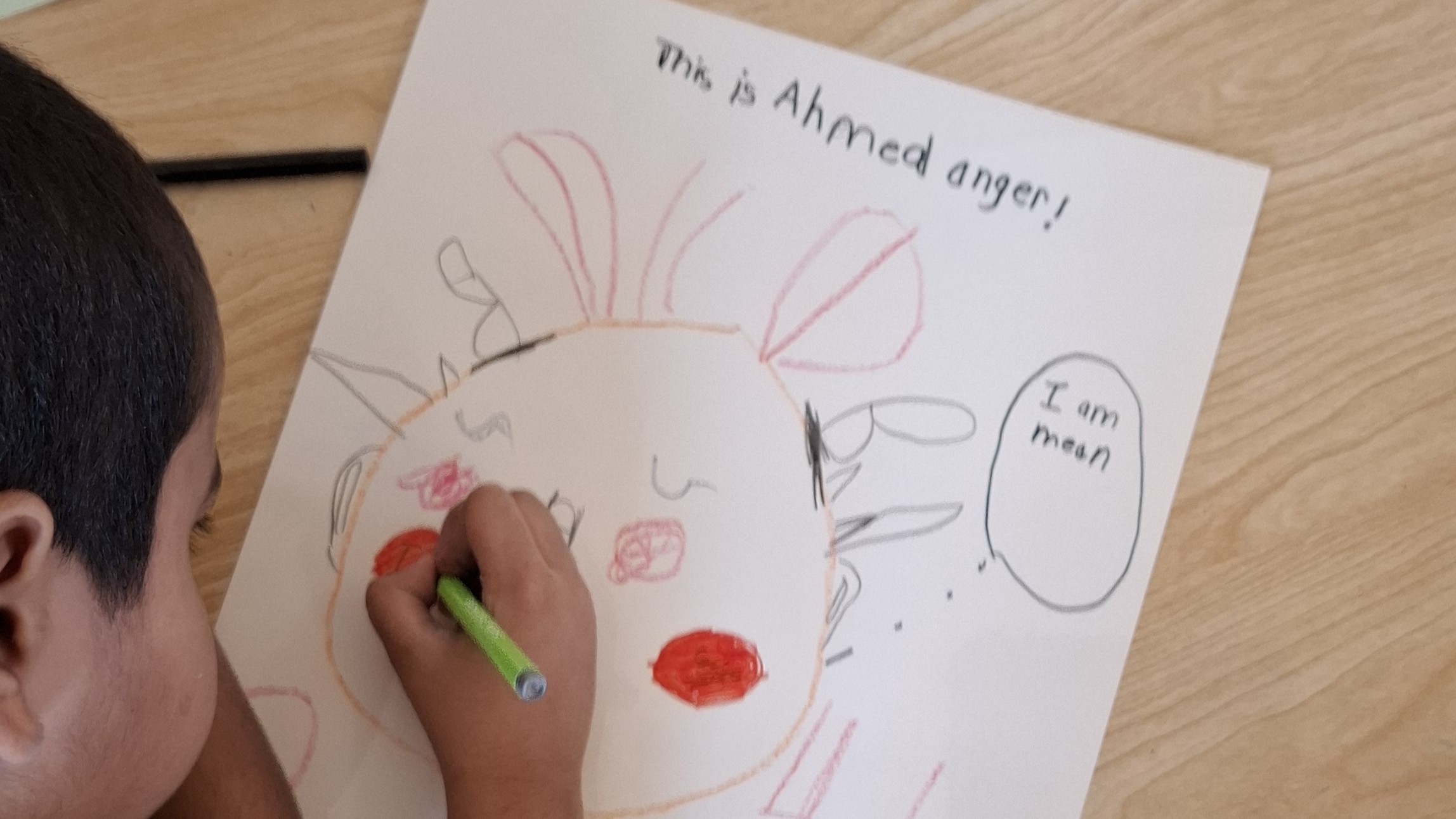
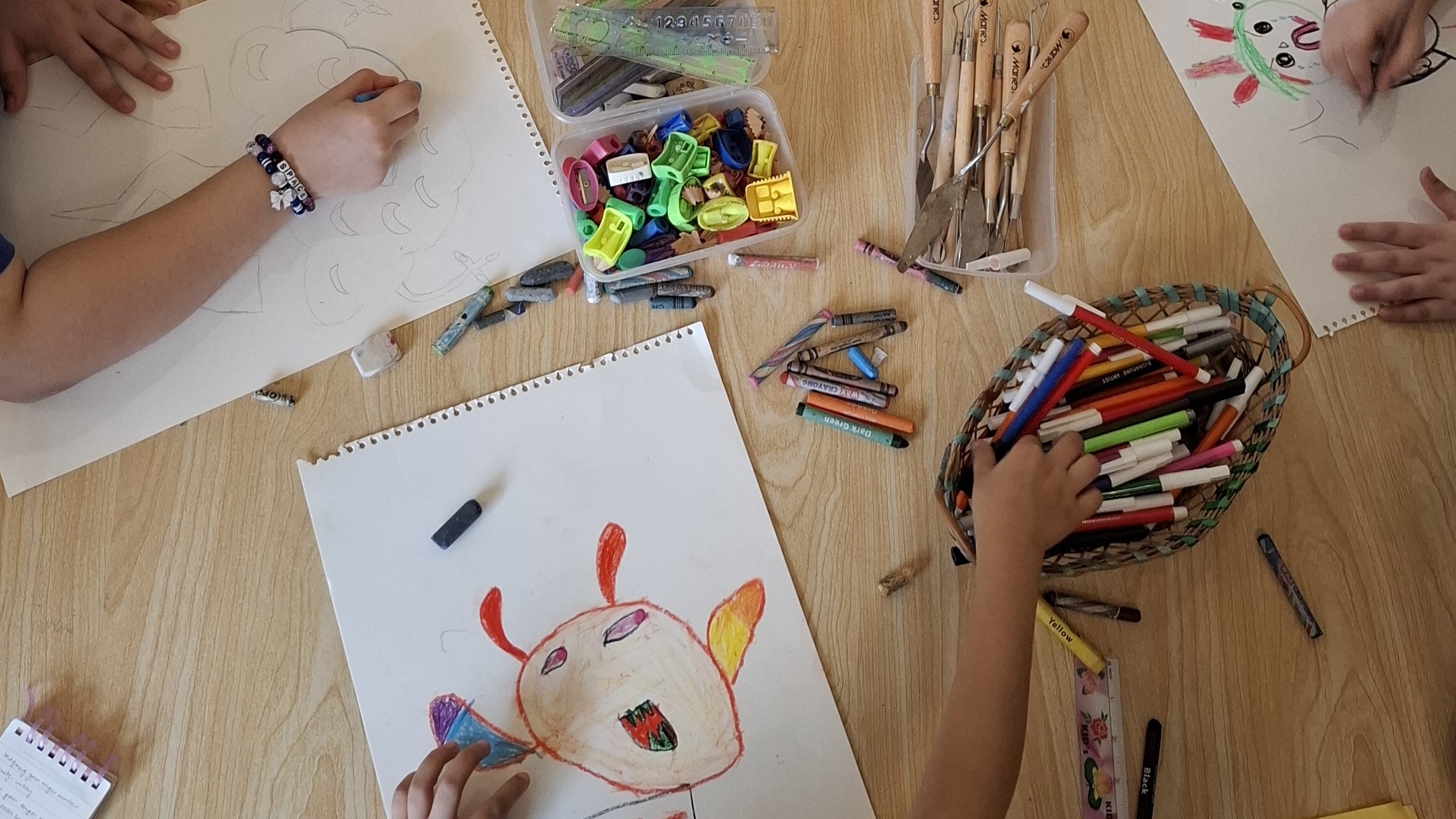
Inspired by this new perspective, the children were invited to draw their own anger monsters. What does your anger look like? Is it pointy? Is it slow and silent? one child drew colorful trails with her anger monster demonstrating how her anger had many emotions attached to it while another drew a tiny figure alongside her anger monster saying “my anger has a kind baby”. These weren’t just drawings, they were a sneak peek into their thoughts and feelings. Children shared how their anger makes their cheeks feel hot, their heads feel puffy, and how their teeth grind and they feel like throwing something. These were clues that the children just learnt the most important skill of all: awareness. When we understand how an emotion feels, we’re more equipped to manage it. Next, the children were given a ball of ceramic clay and asked to sculpt their anger monster into a real form allowing them to externalize their anger. Ceramic clay is known for its calming, grounding effect. There's something inherently soothing about mitti; cool earthy texture that listens to your hands and reminds hou that no shape is ever final. It can always be pressed, reshaped and rebuilt. As the children began sculpting their anger monsters, they poured emotions into every pinch, press and twist and gave form to the feeling that are are hard to put into words.
After sculpting their monsters, the children were told to destroy them. Smash them, squeeze them and then transform it into something beautiful. This stage was crucial, giving kids a safe space to release intense emotions through a physical act. You could sense the weight lifting as they pressed down with determination and relief. Similar to Kintsugi, a Japanese art form that repairs broken pottery with gold, highlighting its imperfections, the children learned to mend their emotional breaks with care and creativity. They became the artists of their own healing, transforming their struggles into something new and valuable. It was a lesson in release, in creativity, in healing. One monster became an ice-cream, another a teapot. These final sculptures were symbols of change. Through this process, children experienced sublimation: a healthy, creative way to release powerful emotions.
As we observed the intensity with which some children crushed their clay monsters, we realized just how much emotion they were expressing without violence or shame. The clay gave them a safe, non-verbal outlet to express themselves. Sculpting became a mirror through which children could see their emotions clearly and then take control of them. The children didn’t just learn how to express anger, they learned how to understand it, reshape it and let it go.
The key takeaway from day 5 is powerful-
غصہ ضروری ہے، لیکن اس کو صحیح جگہ کیسے نکالنا ہے یہ زیادہ ضروری ہے۔
(Anger is necessary, but knowing how to express it in the right place is even more important.)
And that’s how we summed up this day of emotional empowerment!
-Written by Barka Syed
Some days leave a lasting impression on or hearts and day 5 at the summer camp was one of those. This was perhaps the most profound of all as we stepped into the deeper waters of what it means to be human. The focus of the day was something often misunderstood and even feared: Anger. This day was about learning that anger is not the enemy, it’s a message in disguise.
We began with a powerful conversation on self esteem and how it begins to form early in life. Children absorb more than just our words; they absorb or biases, reactions and attitudes. They notice when we focus more on the wrong than the right, and slowly, negative bias forms. This tendency to focus more on what’s bad than good isn’t just a habit it’s evolutionary. Or brains are wired to detect danger, which means negativity often sticks harder. But while this once kept us alive, today it can shrink a child’s self-worth before they even realize it. To counter this, the day began with a thoughtful, gentle activity: “A name poem”. Children were asked not to write their names but to choose a quality they see in themselves instead. “my name is kind, my name is brave, my name is Rutaba”- this was a powerful exercise in reclaiming identity. By associating the names with positive qualities, the children were reminded of who they are beyond labels and expectations. It sparked reflection, encouraged introspection of their inner world and helped them feel pride in their uniqueness.
From there, we transitioned to the core theme of the day which was anger. Miss Rutaba, the facilitator, introduced it as something not to be feared or rejected, but as something that wears a mask. Anger is a mask that hides hurt underneath. “when we’re sad, we meet anger” said one child. “anger is a monster that has many faces behind it” said another. These raw insights proved that children are not only capable of understanding emotions but also expressing them beautifully when given the chance.
Inspired by this new perspective, the children were invited to draw their own anger monsters. What does your anger look like? Is it pointy? Is it slow and silent? one child drew colorful trails with her anger monster demonstrating how her anger had many emotions attached to it while another drew a tiny figure alongside her anger monster saying “my anger has a kind baby”. These weren’t just drawings, they were a sneak peek into their thoughts and feelings. Children shared how their anger makes their cheeks feel hot, their heads feel puffy, and how their teeth grind and they feel like throwing something. These were clues that the children just learnt the most important skill of all: awareness. When we understand how an emotion feels, we’re more equipped to manage it. Next, the children were given a ball of ceramic clay and asked to sculpt their anger monster into a real form allowing them to externalize their anger. Ceramic clay is known for its calming, grounding effect. There's something inherently soothing about mitti; cool earthy texture that listens to your hands and reminds hou that no shape is ever final. It can always be pressed, reshaped and rebuilt. As the children began sculpting their anger monsters, they poured emotions into every pinch, press and twist and gave form to the feeling that are are hard to put into words.
After sculpting their monsters, the children were told to destroy them. Smash them, squeeze them and then transform it into something beautiful. This stage was crucial, giving kids a safe space to release intense emotions through a physical act. You could sense the weight lifting as they pressed down with determination and relief. Similar to Kintsugi, a Japanese art form that repairs broken pottery with gold, highlighting its imperfections, the children learned to mend their emotional breaks with care and creativity. They became the artists of their own healing, transforming their struggles into something new and valuable. It was a lesson in release, in creativity, in healing. One monster became an ice-cream, another a teapot. These final sculptures were symbols of change. Through this process, children experienced sublimation: a healthy, creative way to release powerful emotions.
As we observed the intensity with which some children crushed their clay monsters, we realized just how much emotion they were expressing without violence or shame. The clay gave them a safe, non-verbal outlet to express themselves. Sculpting became a mirror through which children could see their emotions clearly and then take control of them. The children didn’t just learn how to express anger, they learned how to understand it, reshape it and let it go.
The key takeaway from day 5 is powerful-
غصہ ضروری ہے، لیکن اس کو صحیح جگہ کیسے نکالنا ہے یہ زیادہ ضروری ہے۔
(Anger is necessary, but knowing how to express it in the right place is even more important.)
And that’s how we summed up this day of emotional empowerment!
-Written by Barka Syed



Comments
You may also like

Article
Pema Through My Eyes - As a Co-Facilitator
Barka Syed
Article
Chuttiyan at Nani Ghar- Part 6: Build Your Own World
Barka Syed
Article
Chuttiyan at Nani Ghar- Part 4: A Card to Yourself
Barka Syed