
What We Do
Learn About Us
Support Us
Barka Syed
Chuttiyan at Nani Ghar- Part 3: Turning Trash into Treasure
Chuttiyan at Nani Ghar- Part 3: Turning Trash into Treasure
Published
Wednesday, September 17, 2025
Author
Barka is a psychology student with a curious mind and a love for storytelling. Passionate about exploring human behavior, she blends her academic journey with content writing to share ideas that inspire and inform. Outside her studies, she finds peace in nature and joy in the company of animals.
Barka Syed
Day 3 of the summer camp happened to fall on July 3rd- which turned out to be both International Rock Day and Plastic Free Day. This coincidence gave a perfect reason to explore themes of sustainability and climate awareness with the children.
The day kicked off with a simple but meaningful discussion about the environment. Children talked about how plastic affects nature and how even small changes like using less plastic, saving water, not wasting food, reusing things at home or picking up litter can make a big difference. These conversations helped children understand that their actions matter and that they have the power to take care of the planet from a young age.
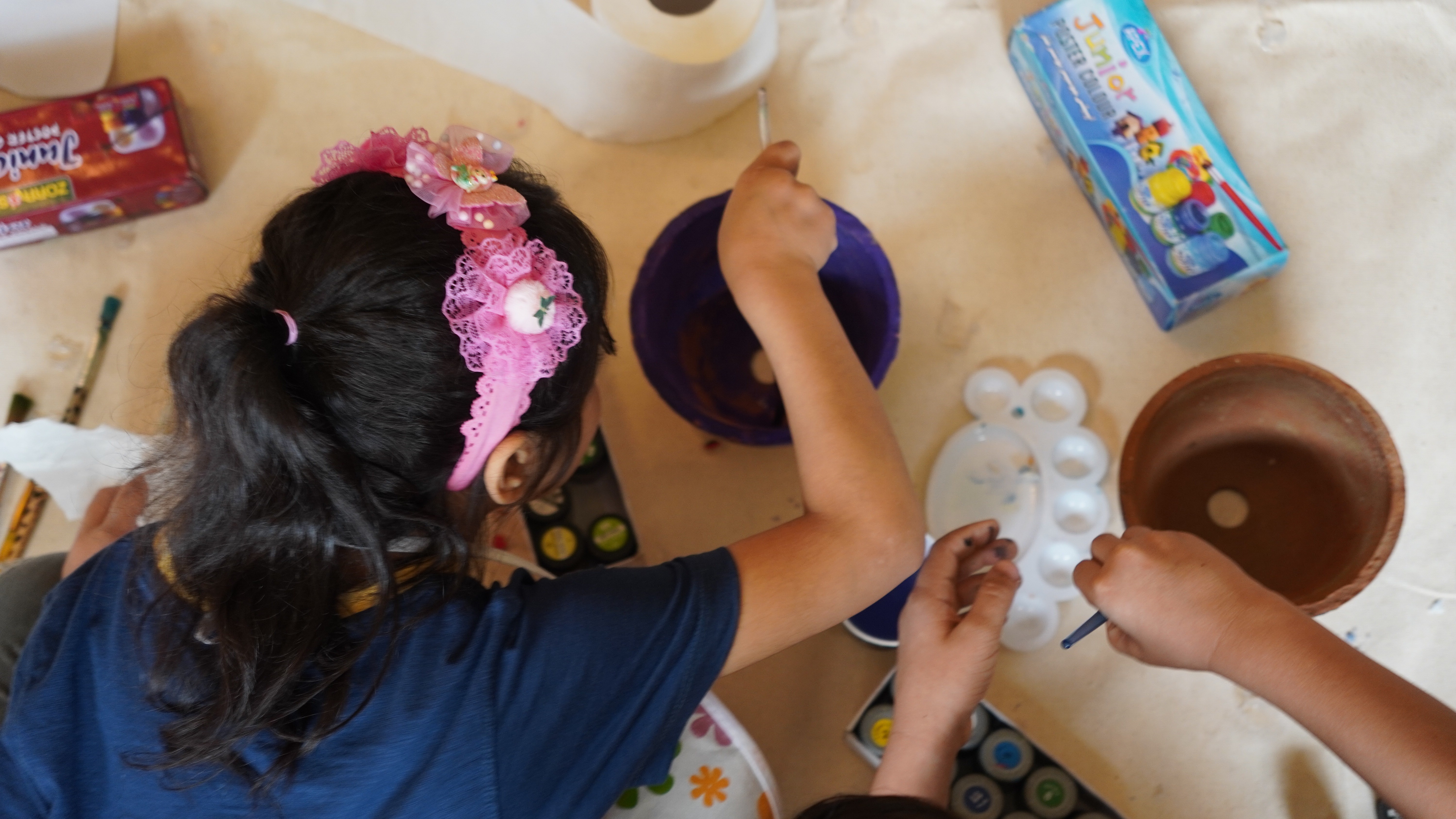
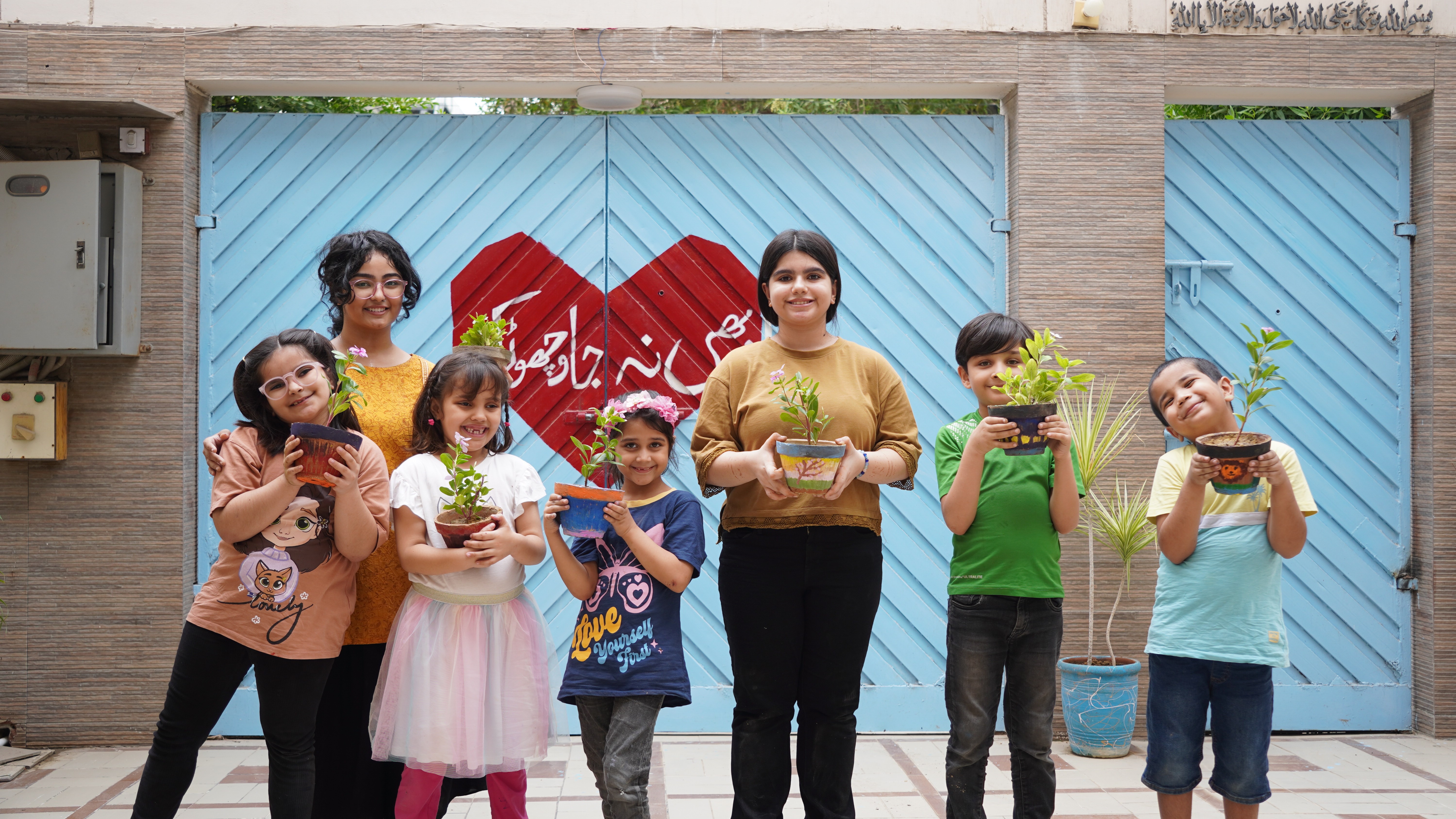
With that, the day’s activities unfolded. First activity of the day was pot painting and planting. The room transformed into a lively art studio as each child received a plain clay pot, ready to transform it into something personal and meaningful. This hands-on activity encouraged creativity while also offering a sensory experience. Some painted patterns, others added shapes or animals; a lion outside guarding the soil within. When one child learned through trial and error that painting inside the pot could harm the plant, it reflected how that simple mistake led to a powerful lesson in caring for life and how curiosity paired with consequences develops problem solving skills in early childhood.
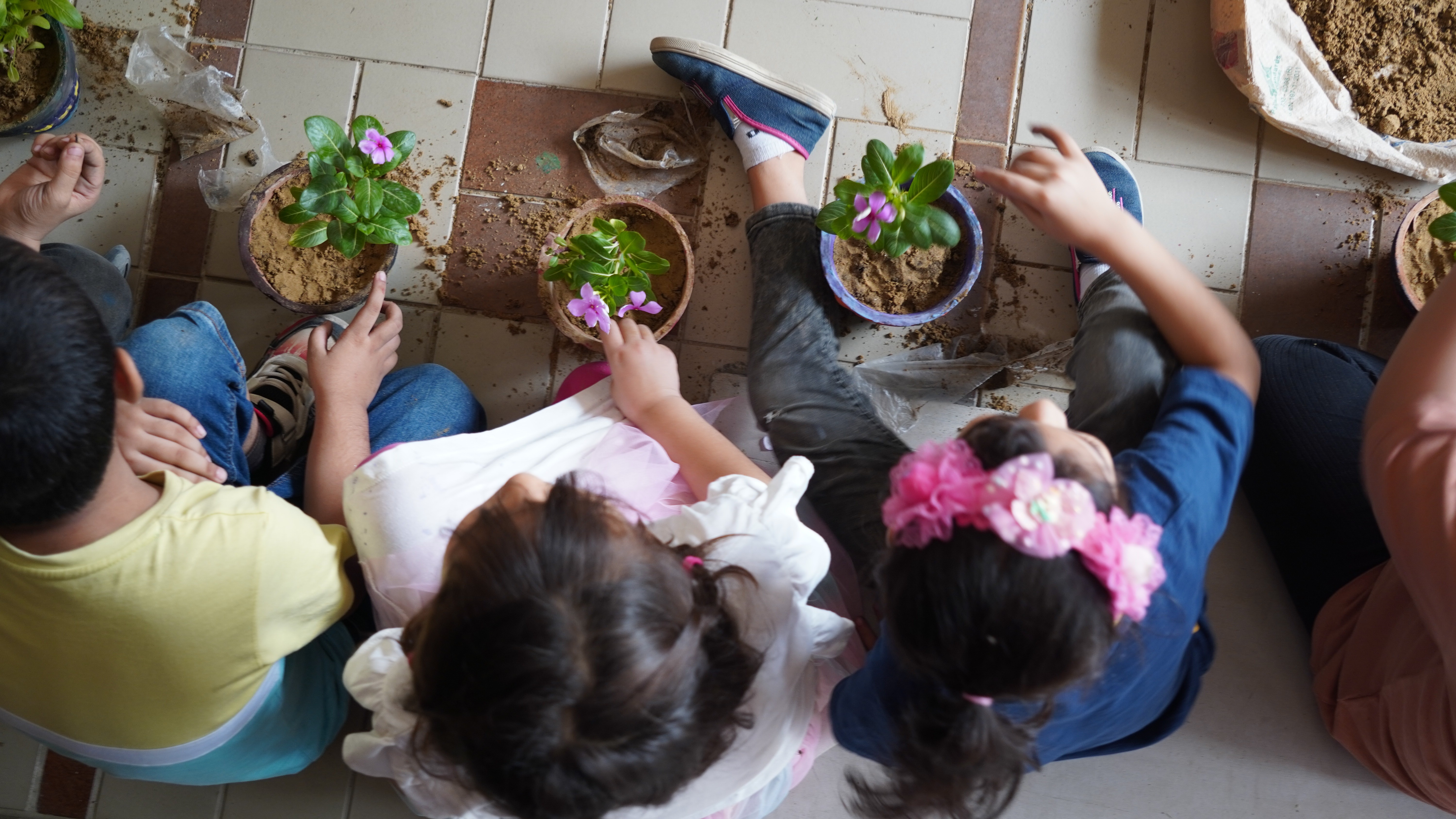
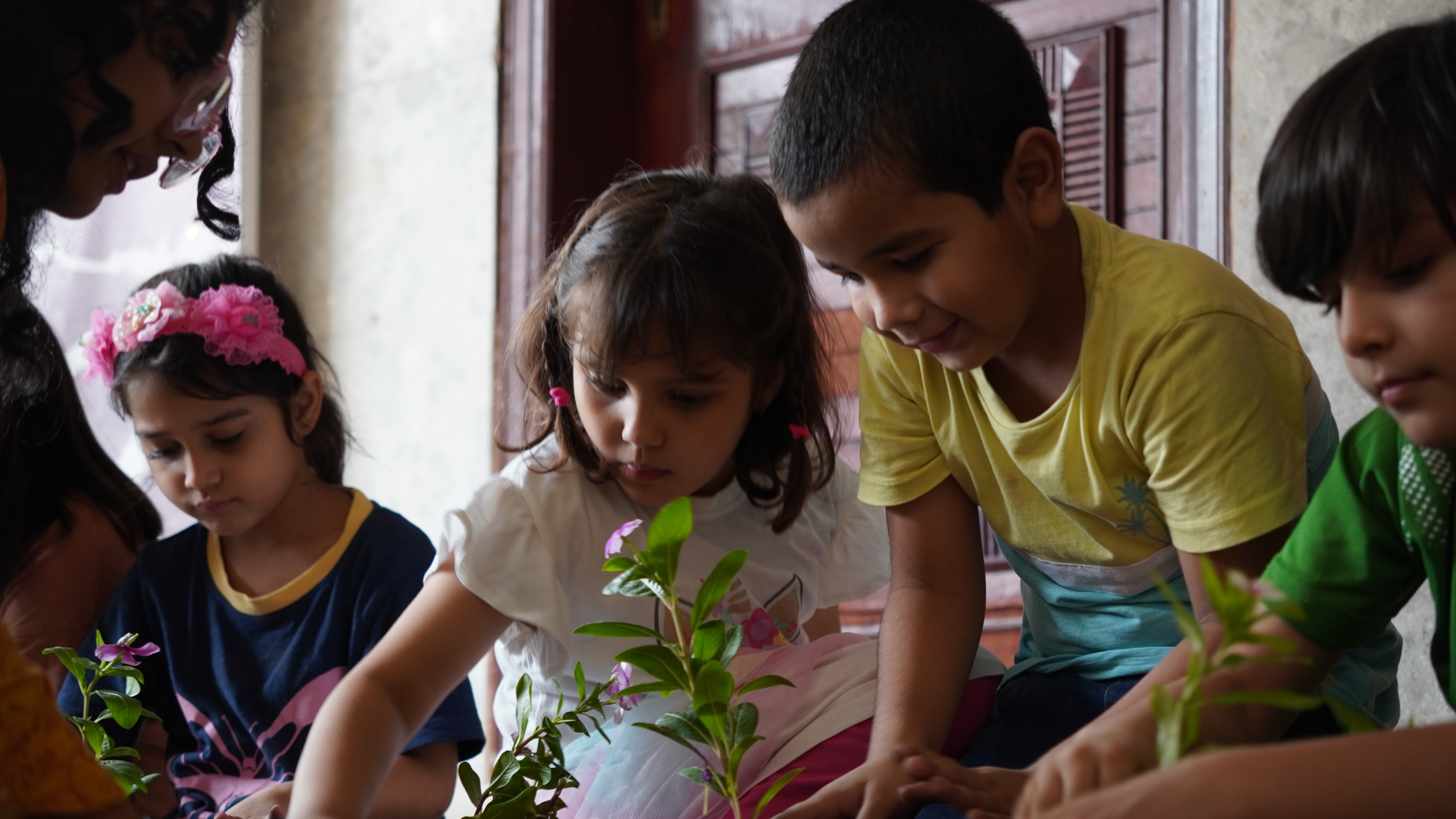
With their pots now dry, the children moved to the next exciting part of the day: planting. Each child gently filled their painted pot with soil, touched it, smelled it, felt its texture. They were told how soil is alive with its tiny organisms, nutrients and layers helping it grow. This planting activity gave children a sense of ownership and responsibility knowing that their attention and care to the plant matters.
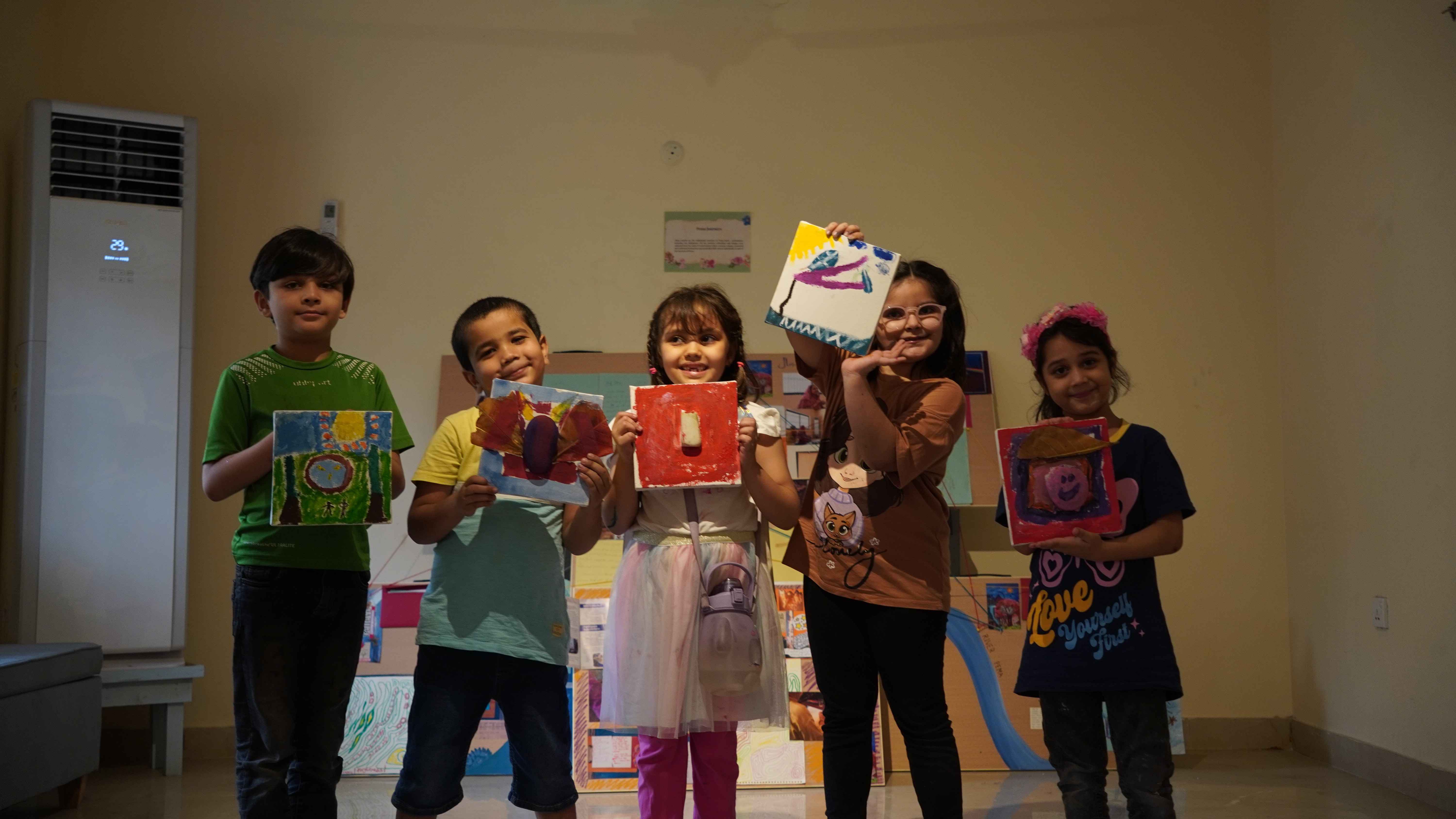
Next came a scavenger hunt that wove creativity into nature. Children explored the flowerbeds, collecting leaves, pebbles, sand, and flowers; careful to pick the fallen ones, not to pluck them off. This simple respect for nature revealed a deeper awareness that children understand the lifecycles of what they hold in their hands. Back at the canvas table, their findings transformed: a few leaves and a pebble became a stunning butterfly on one canvas while another bloomed into a serene composition of water lillies floating gently on a calm pond entirely from nature's overlooked elements.. What was once “trash” was now an expressive, unique form of art crafted entirely from nature’s palette.
When children work with natural or discarded materials, they begin to see value in what’s often ignored, and this sparks a strong desire to protect those resources. Each child took their plant home with a new sense of responsibility. The simple task of watering the plant everyday and watching it grow aims to teach children patience and help build a habit for mindfulness.
Our objective for the day was clear by the end of day 3; giving children the space to explore nature through art helped build a strong sense of awareness. Using recycled material helped them understand the importance of sustainability and spark the urge to protect the world around them. This day reminded both adults and children the value of protecting the soil we live on because everything we create or grow, starts from there and sometimes, all it takes is a little bit of creativity to turn trash into treasure!
-Written by Barka Syed
Day 3 of the summer camp happened to fall on July 3rd- which turned out to be both International Rock Day and Plastic Free Day. This coincidence gave a perfect reason to explore themes of sustainability and climate awareness with the children.
The day kicked off with a simple but meaningful discussion about the environment. Children talked about how plastic affects nature and how even small changes like using less plastic, saving water, not wasting food, reusing things at home or picking up litter can make a big difference. These conversations helped children understand that their actions matter and that they have the power to take care of the planet from a young age.
With that, the day’s activities unfolded. First activity of the day was pot painting and planting. The room transformed into a lively art studio as each child received a plain clay pot, ready to transform it into something personal and meaningful. This hands-on activity encouraged creativity while also offering a sensory experience. Some painted patterns, others added shapes or animals; a lion outside guarding the soil within. When one child learned through trial and error that painting inside the pot could harm the plant, it reflected how that simple mistake led to a powerful lesson in caring for life and how curiosity paired with consequences develops problem solving skills in early childhood.
With their pots now dry, the children moved to the next exciting part of the day: planting. Each child gently filled their painted pot with soil, touched it, smelled it, felt its texture. They were told how soil is alive with its tiny organisms, nutrients and layers helping it grow. This planting activity gave children a sense of ownership and responsibility knowing that their attention and care to the plant matters.
Next came a scavenger hunt that wove creativity into nature. Children explored the flowerbeds, collecting leaves, pebbles, sand, and flowers; careful to pick the fallen ones, not to pluck them off. This simple respect for nature revealed a deeper awareness that children understand the lifecycles of what they hold in their hands. Back at the canvas table, their findings transformed: a few leaves and a pebble became a stunning butterfly on one canvas while another bloomed into a serene composition of water lillies floating gently on a calm pond entirely from nature's overlooked elements.. What was once “trash” was now an expressive, unique form of art crafted entirely from nature’s palette.
When children work with natural or discarded materials, they begin to see value in what’s often ignored, and this sparks a strong desire to protect those resources. Each child took their plant home with a new sense of responsibility. The simple task of watering the plant everyday and watching it grow aims to teach children patience and help build a habit for mindfulness.
Our objective for the day was clear by the end of day 3; giving children the space to explore nature through art helped build a strong sense of awareness. Using recycled material helped them understand the importance of sustainability and spark the urge to protect the world around them. This day reminded both adults and children the value of protecting the soil we live on because everything we create or grow, starts from there and sometimes, all it takes is a little bit of creativity to turn trash into treasure!
-Written by Barka Syed



Comments
You may also like

Article
Pema Through My Eyes - As a Co-Facilitator
Barka Syed
Article
Chuttiyan at Nani Ghar- Part 6: Build Your Own World
Barka Syed
Article
Chuttiyan at Nani Ghar- Part 5: Ghussa Zaruri Hai
Barka Syed