What We Do
Learn About Us
Support Us
Barka Syed
Chuttiyan at Nani Ghar- Part 2: From Self Story to Self-Awareness - Making Zines
Chuttiyan at Nani Ghar- Part 2: From Self Story to Self-Awareness - Making Zines
Published
Wednesday, September 17, 2025
Author
Barka is a psychology student with a curious mind and a love for storytelling. Passionate about exploring human behavior, she blends her academic journey with content writing to share ideas that inspire and inform. Outside her studies, she finds peace in nature and joy in the company of animals.
Barka Syed
Day 2 of Nani Ghar summer camp began with an air of buzzing curiosity. The little eager eyes wondering what was waiting for them beyond the colourful rugs and walls of the warm, familiar space.
To an outsider, it may look like just another art day- a typical summer camp activity with markers and glue sticks. But Nani Ghar is not just about art, it is about expression, connection and creativity. Art is simply the language. The real conversation was about feelings, identity, and the invisible threads that link our inner worlds with those around us. At the heart of this initiative is Social Emotional Learning (SEL)- a quiet but powerful force shaping young minds.
As everyone settled in, a brief discussion unfolded about the iceberg theory by Sigmund Freud. Alishba gently explained that the thoughts, feelings, and actions that we’re aware of is only the tip of the iceberg. Deep below the surface lies the unconscious mind, filled with buried emotions, memories, and dreams. “Sometimes our dreams are little whispers from that hidden part of us”. The children listened with wide eyes and then one by one, began sharing their strangest dreams. When one child giggled about seeing a unicorn stuffed inside a turkey, another added “an ant lifting heavy dumbbells!”, filling the room with laughter, confusion, and pure wonder.
Human development depends heavily on imagination, which fuels creativity, problem-solving, and personal development. It enables us to look beyond the here and now and consider alternative options. Children benefit alot from imaginative play, not just for enjoyment but also for the development of their social, emotional, and cognitive abilities. They gain an understanding of the world and themselves by transforming ordinary things into creative fantasies. This is why parents must actively promote and provide opportunities for imaginative play in a child's daily life.
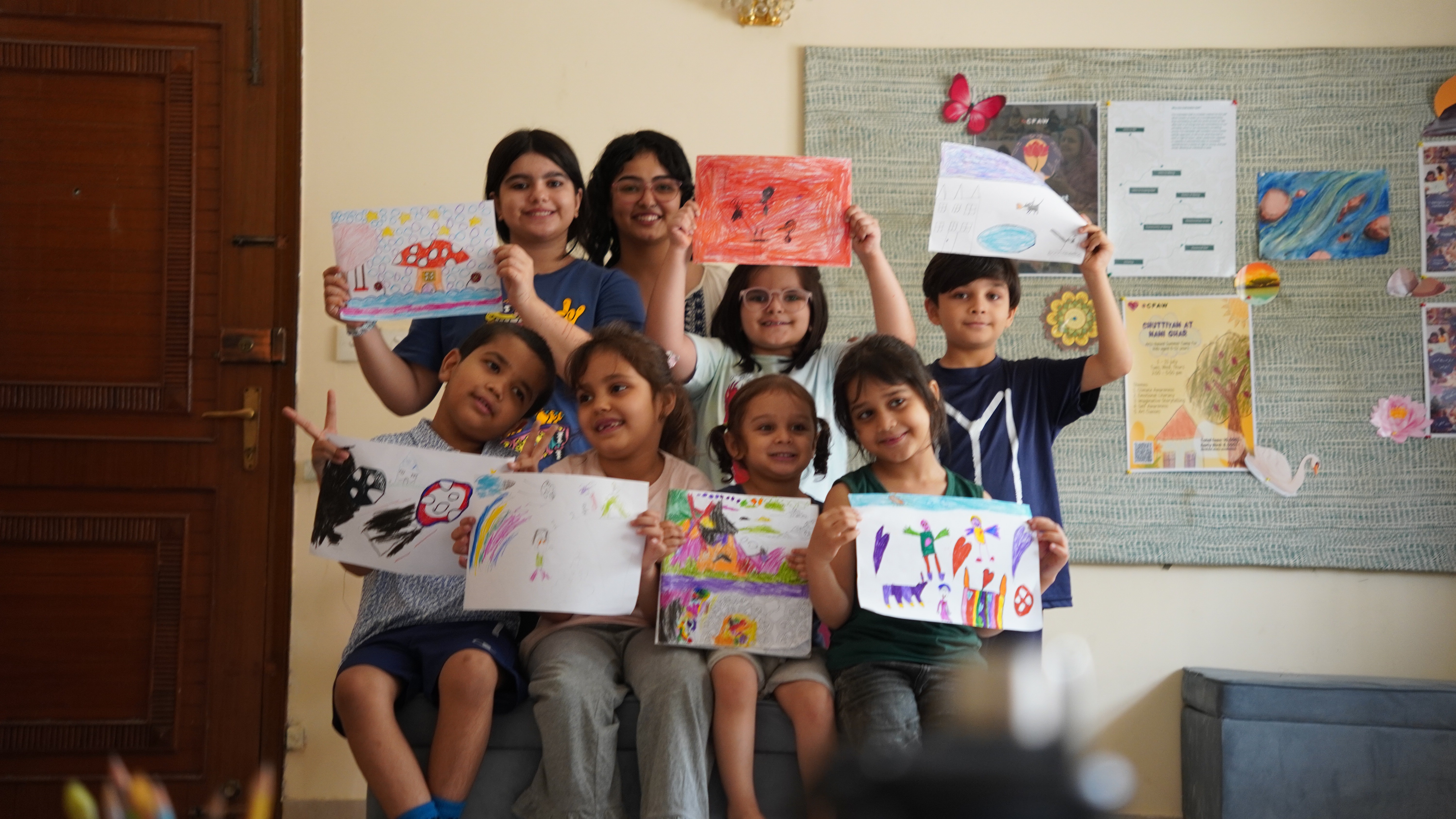
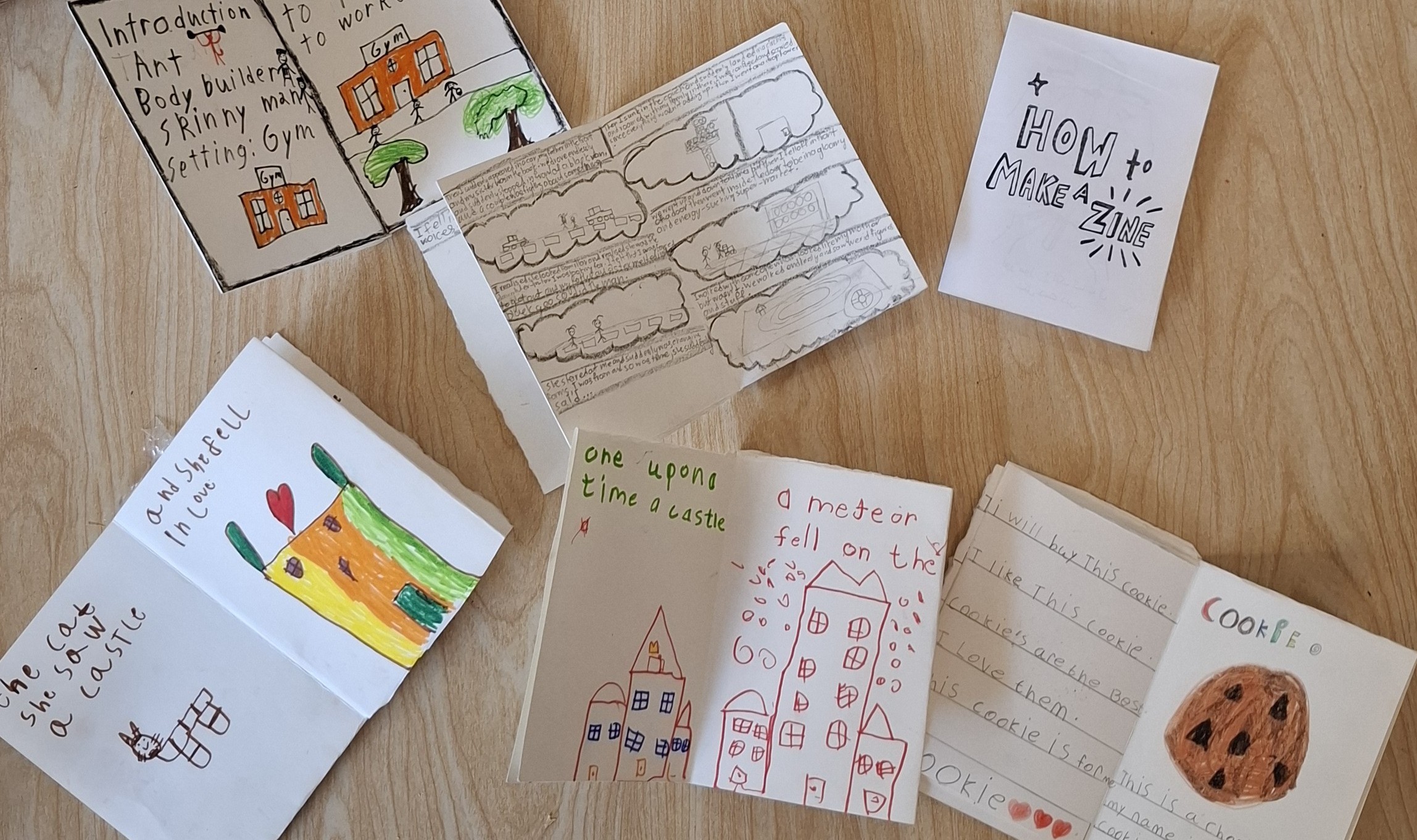
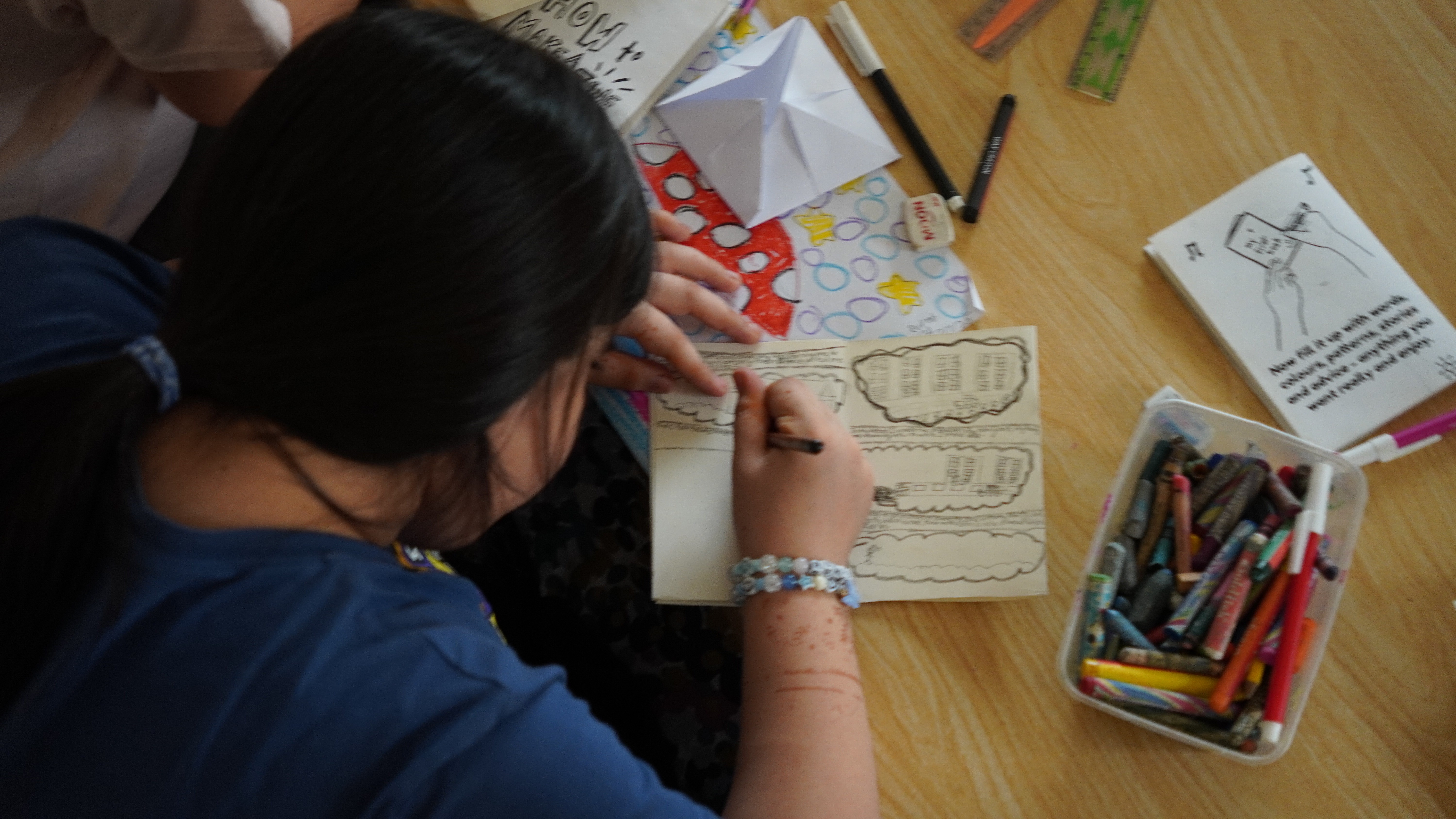
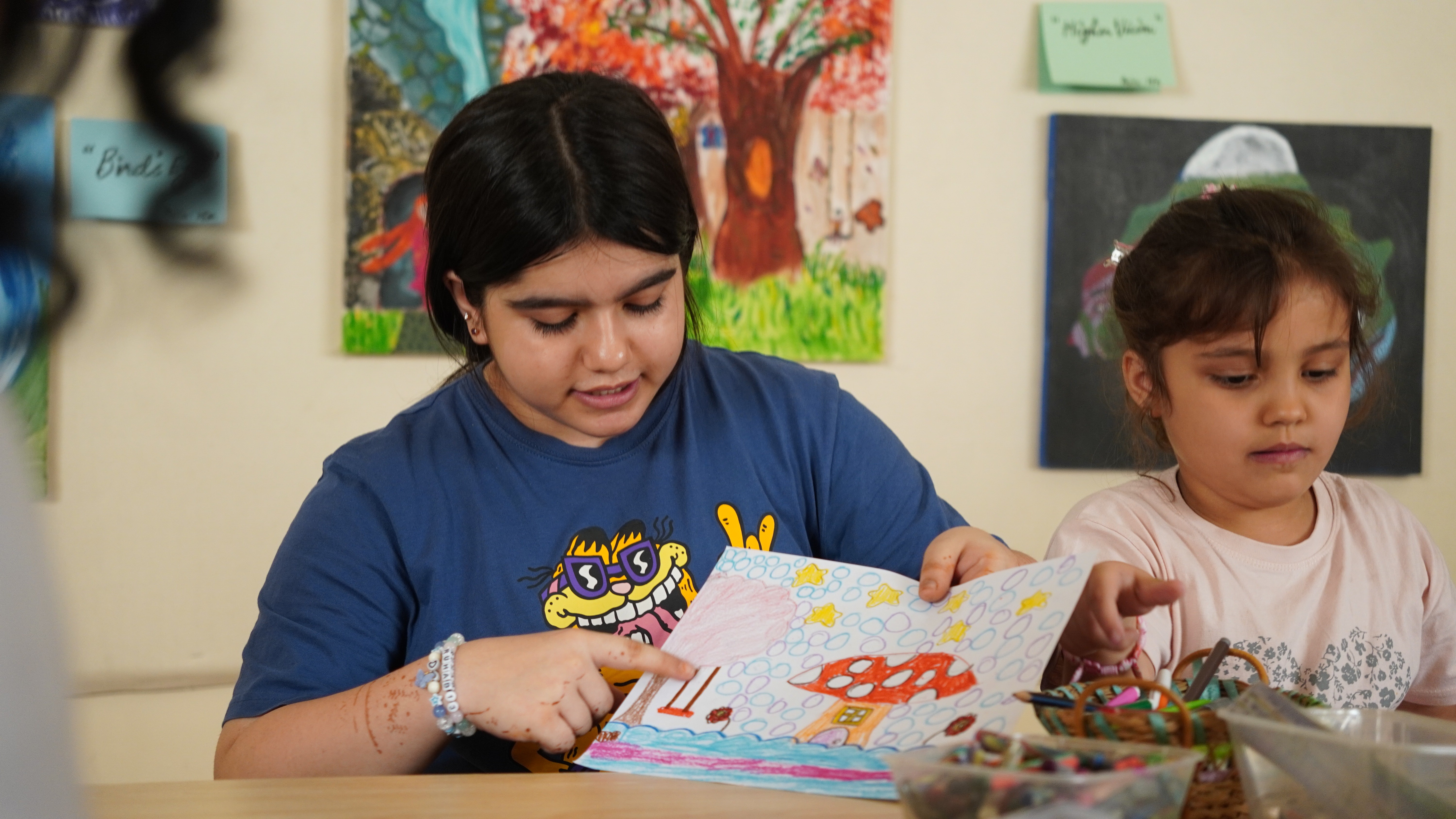
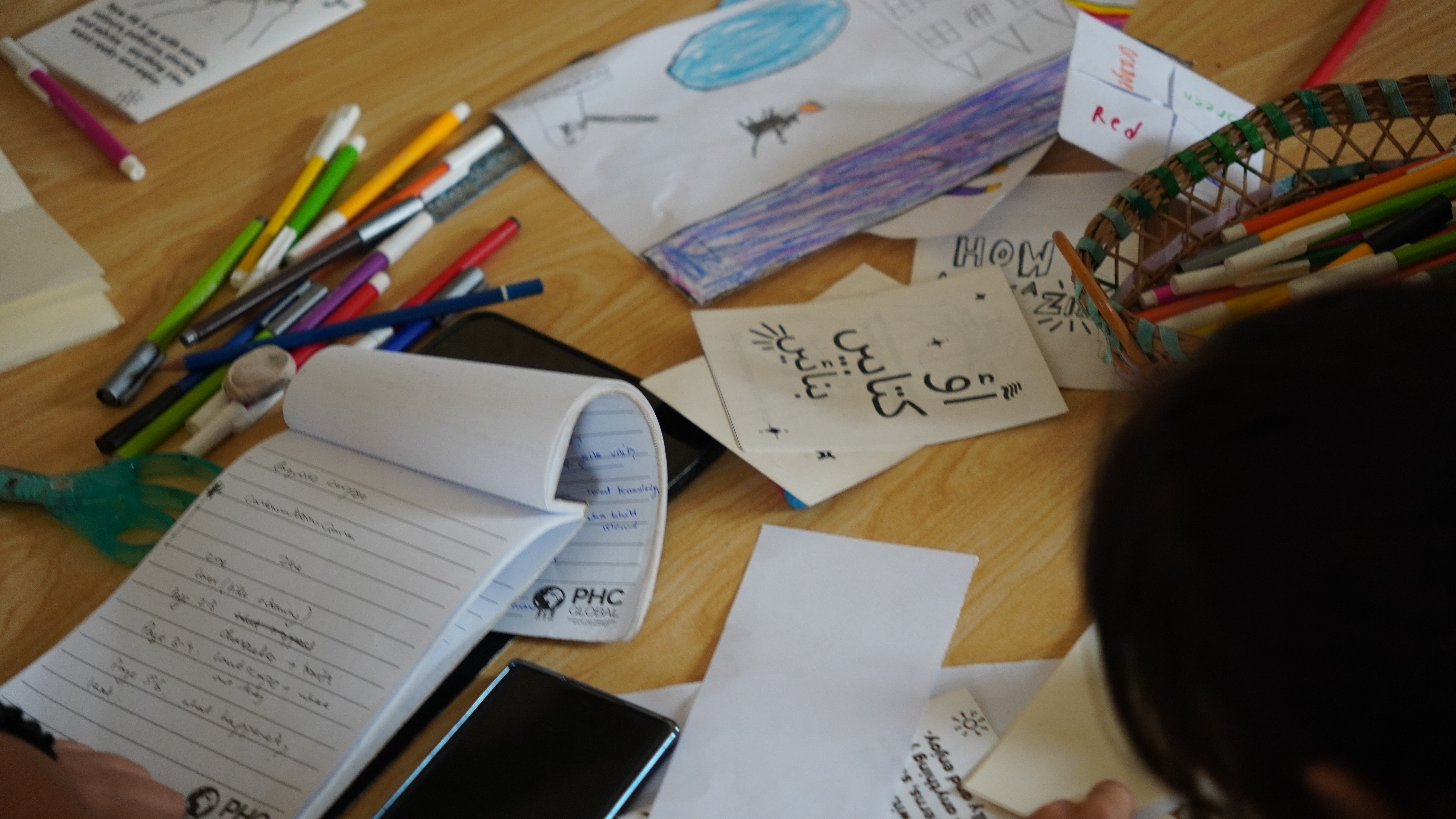
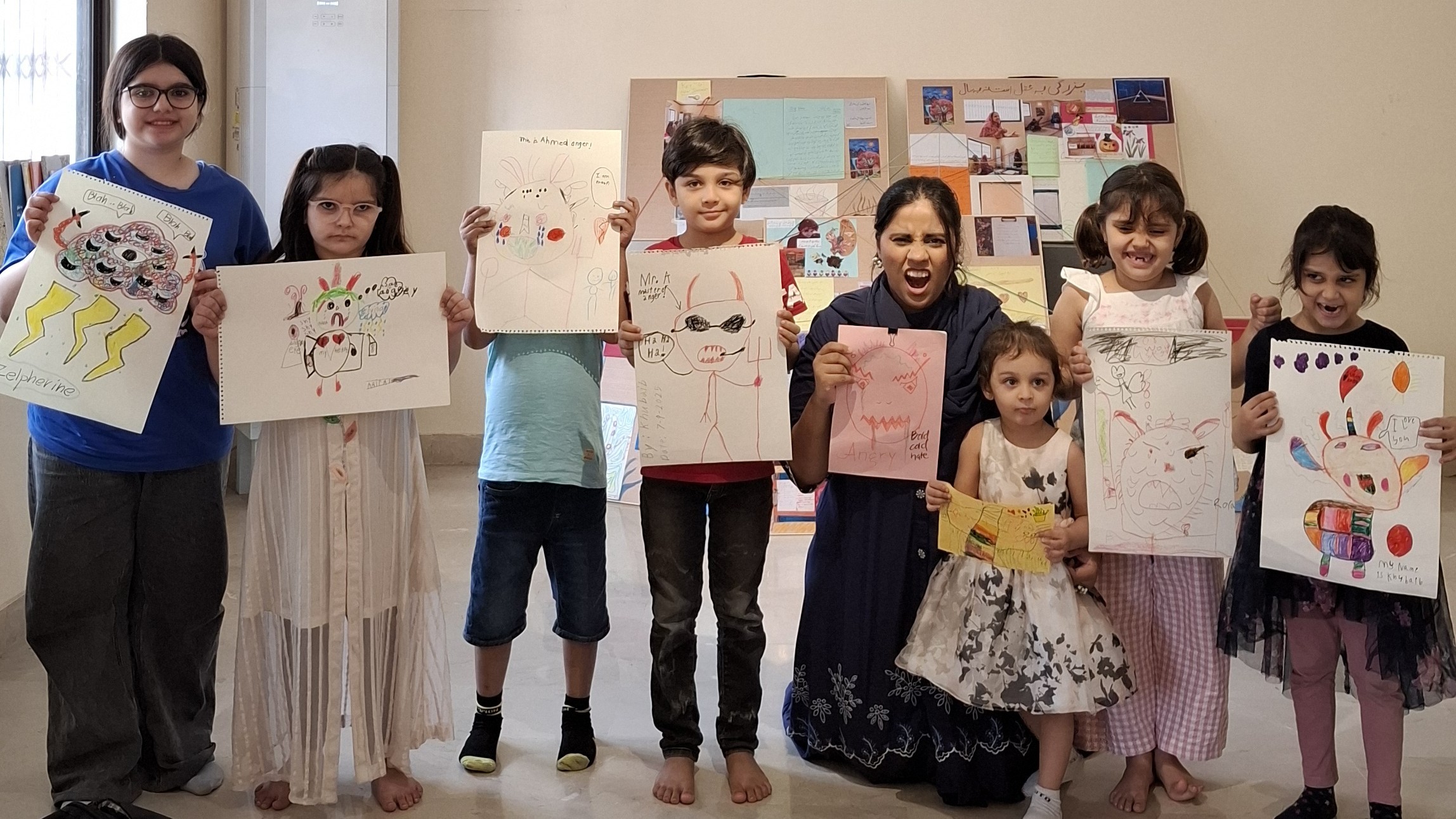
With their dreams dancing fresh in their minds, the children quickly folded their blank sheets into zines- where they could write, draw and collage their inner world. Each child created their self story, pouring their wildest thoughts and feelings into the zines. During the zine making process, children naturally began engaging in storytelling by turning their creative ideas into illustrated narratives. One child transformed her zine into a storybook about a cat conquering a castle, while another created a comic filled with imaginative characters. As they shared their zines with others, their confidence grew and they adapted to the idea of presenting their stories to others. The different forms of expressions here helped the children develop an understanding of how to communicate their ideas to a wider audience.
The zines weren’t just art projects, they were psychological portraits. Just like the Children’s Apperception Test (CAT) where kids are shown animal characters in relatable scenarios to understand their inner world, these zines reveal the children’s personalities, fears, hopes, and their relationships. Many children unknowingly placed their siblings, parents of themselves as the main character of their story. Through these characters, they told us how they saw their family, how they coped with challenges, and how they made sense of conflict.
While adults often assume children don’t understand emotions, the truth isov, they feel deeply but don’t always have the tools to express it. This activity didn’t just stay within the pages of their booklets. It opened conversations about the environment, coping mechanisms, and interpersonal relationships. Additionally, the zine-making gave them something tangible to hold and share. To see their weird, wonderful ideas not just accepted but celebrated gave them a powerful sense of ownership, confidence, motivation, and pride that can’t be taught in books.
By the end of the day, the tiny booklets had become more than just stories. They were self-reflections. They were glimpses into how children see the world- not just the outside world but the inner world; the unconscious mind.
-Written by Barka Syed
Day 2 of Nani Ghar summer camp began with an air of buzzing curiosity. The little eager eyes wondering what was waiting for them beyond the colourful rugs and walls of the warm, familiar space.
To an outsider, it may look like just another art day- a typical summer camp activity with markers and glue sticks. But Nani Ghar is not just about art, it is about expression, connection and creativity. Art is simply the language. The real conversation was about feelings, identity, and the invisible threads that link our inner worlds with those around us. At the heart of this initiative is Social Emotional Learning (SEL)- a quiet but powerful force shaping young minds.
As everyone settled in, a brief discussion unfolded about the iceberg theory by Sigmund Freud. Alishba gently explained that the thoughts, feelings, and actions that we’re aware of is only the tip of the iceberg. Deep below the surface lies the unconscious mind, filled with buried emotions, memories, and dreams. “Sometimes our dreams are little whispers from that hidden part of us”. The children listened with wide eyes and then one by one, began sharing their strangest dreams. When one child giggled about seeing a unicorn stuffed inside a turkey, another added “an ant lifting heavy dumbbells!”, filling the room with laughter, confusion, and pure wonder.
Human development depends heavily on imagination, which fuels creativity, problem-solving, and personal development. It enables us to look beyond the here and now and consider alternative options. Children benefit alot from imaginative play, not just for enjoyment but also for the development of their social, emotional, and cognitive abilities. They gain an understanding of the world and themselves by transforming ordinary things into creative fantasies. This is why parents must actively promote and provide opportunities for imaginative play in a child's daily life.
With their dreams dancing fresh in their minds, the children quickly folded their blank sheets into zines- where they could write, draw and collage their inner world. Each child created their self story, pouring their wildest thoughts and feelings into the zines. During the zine making process, children naturally began engaging in storytelling by turning their creative ideas into illustrated narratives. One child transformed her zine into a storybook about a cat conquering a castle, while another created a comic filled with imaginative characters. As they shared their zines with others, their confidence grew and they adapted to the idea of presenting their stories to others. The different forms of expressions here helped the children develop an understanding of how to communicate their ideas to a wider audience.
The zines weren’t just art projects, they were psychological portraits. Just like the Children’s Apperception Test (CAT) where kids are shown animal characters in relatable scenarios to understand their inner world, these zines reveal the children’s personalities, fears, hopes, and their relationships. Many children unknowingly placed their siblings, parents of themselves as the main character of their story. Through these characters, they told us how they saw their family, how they coped with challenges, and how they made sense of conflict.
While adults often assume children don’t understand emotions, the truth isov, they feel deeply but don’t always have the tools to express it. This activity didn’t just stay within the pages of their booklets. It opened conversations about the environment, coping mechanisms, and interpersonal relationships. Additionally, the zine-making gave them something tangible to hold and share. To see their weird, wonderful ideas not just accepted but celebrated gave them a powerful sense of ownership, confidence, motivation, and pride that can’t be taught in books.
By the end of the day, the tiny booklets had become more than just stories. They were self-reflections. They were glimpses into how children see the world- not just the outside world but the inner world; the unconscious mind.
-Written by Barka Syed



Comments
You may also like

Article
Pema Through My Eyes - As a Co-Facilitator
Barka Syed
Article
Chuttiyan at Nani Ghar- Part 6: Build Your Own World
Barka Syed
Article
Chuttiyan at Nani Ghar- Part 5: Ghussa Zaruri Hai
Barka Syed