
🗑️🪢🌳
Novel Pedagogies
Participatory Research for Imprinting Change
9%
Large impact observed in learnings for core concepts of arts and trauma informed approaches
20
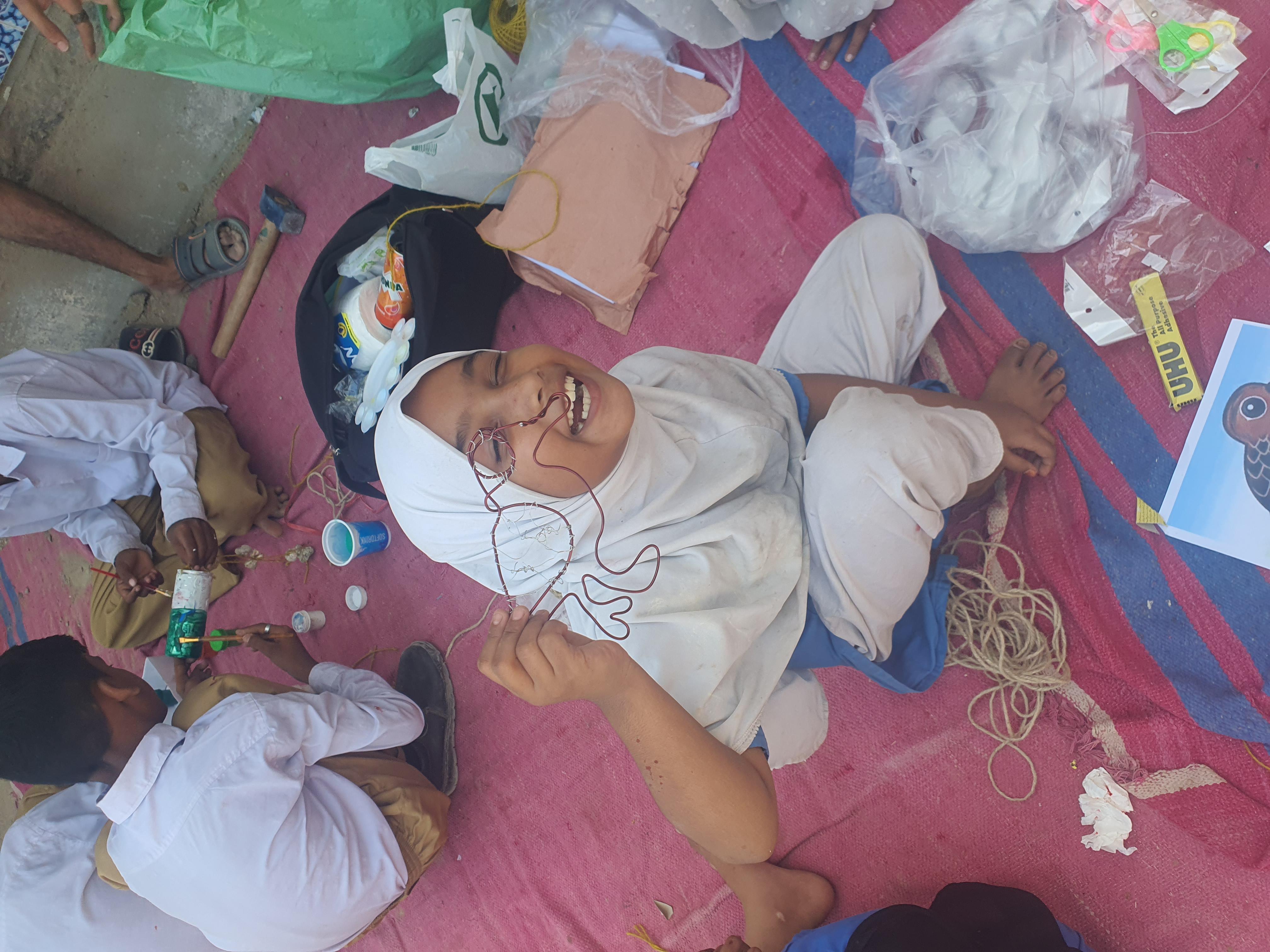
Children facilitated within the Trash-to-treasure program, allowing them to imagine better futures.
Project Overview
Creative Consultancy by Centre for Arts-based Methodologies and Wellbeing (CFAW) for Dr Suneela Ahmed under Reveries of an Urban Dreamland, a grant by Umbrellium & British Council.
Haree Haree: A Love Letter to Salehabad’s Mangroves
In the heart of Karachi’s coast lies Salehabad, a little town that feels like it's caught between the past and the future. An island surrounded by lush mangroves, standing tall like unsung heroes, giving life and breath to a city that often forgets to look back.
Salehabad's story came alive for us at CFAW during a project inspired by mangroves—trees we owe so much to but rarely acknowledge. They’ve been called “Karachi’s Oxygen,” a name that carries weight when you realize how vital they are. But sadly, they’re disappearing, not because they want to but because we’ve stopped caring.
We walked into a school in Salehabad that felt like a metaphor for the town itself. Walls bare, no trees to shade its grounds, no bins for waste. But within those walls, the children brimmed with a spirit that lit up the cracks. Their laughter filled the space in a way that no paint or furniture could.
We began with a question: What if the mangroves could speak? Are they angry and upset? What if their roots told stories, their branches held secrets? What would they say? That’s when things got magical. The kids didn’t just talk about the trees—they became the mangrove ecosystem. One turned into an oyster, proudly declaring how they keep the water clean. Another became a bird, realizing their life depended on the trees. They held strings connecting them to a mangrove tree in the centre of our activity, a simple metaphor for how everything is connected. When the string was cut, you could see the understanding in their eyes—they got the mangroves' anger.
And then came the art which was born not just of creativity but of love. The kids poured their hearts into creating an installation—a mangrove tree made from reclaimed wood and trash. Its seabed, covered in plastic bags, was a stark reminder of the reality their town faces. But they didn’t stop at sadness. They sowed seeds around the installation, added bird feeders, and painted them with images of the creatures they now knew so well. They even wrote love letters to the mangroves, promising to be better friends.
One of them said, “Hum isko haree haree bulayenge!” (“We’ll call it greenery greenery!”). And just like that, the mangroves had new names, new allies, and a new chance at survival.
This wasn’t just about saving trees. It was about healing a bond—between people and nature, between what we have and what we need to protect. This journey taught us all that healing isn’t loud. It’s quiet, like the rustle of leaves or the gentle flow of the tide. It begins with questions and grows with care. Sometimes, it starts with a seed, a string, or a promise written on a piece of paper and tucked into the bark of a tree.
Salehabad, with its haree haree dreams, gave us hope. And we can’t wait to see how this story grows.