
What We Do
Learn About Us
Support Us

COMPANY
PROFILE &
VALUES
COMPANY
PROFILE &
VALUES
Learn about us, and the policies that define us.
SCROLL DOWN

MANDATE
AND VISION
MANDATE
AND VISION
Who We Are
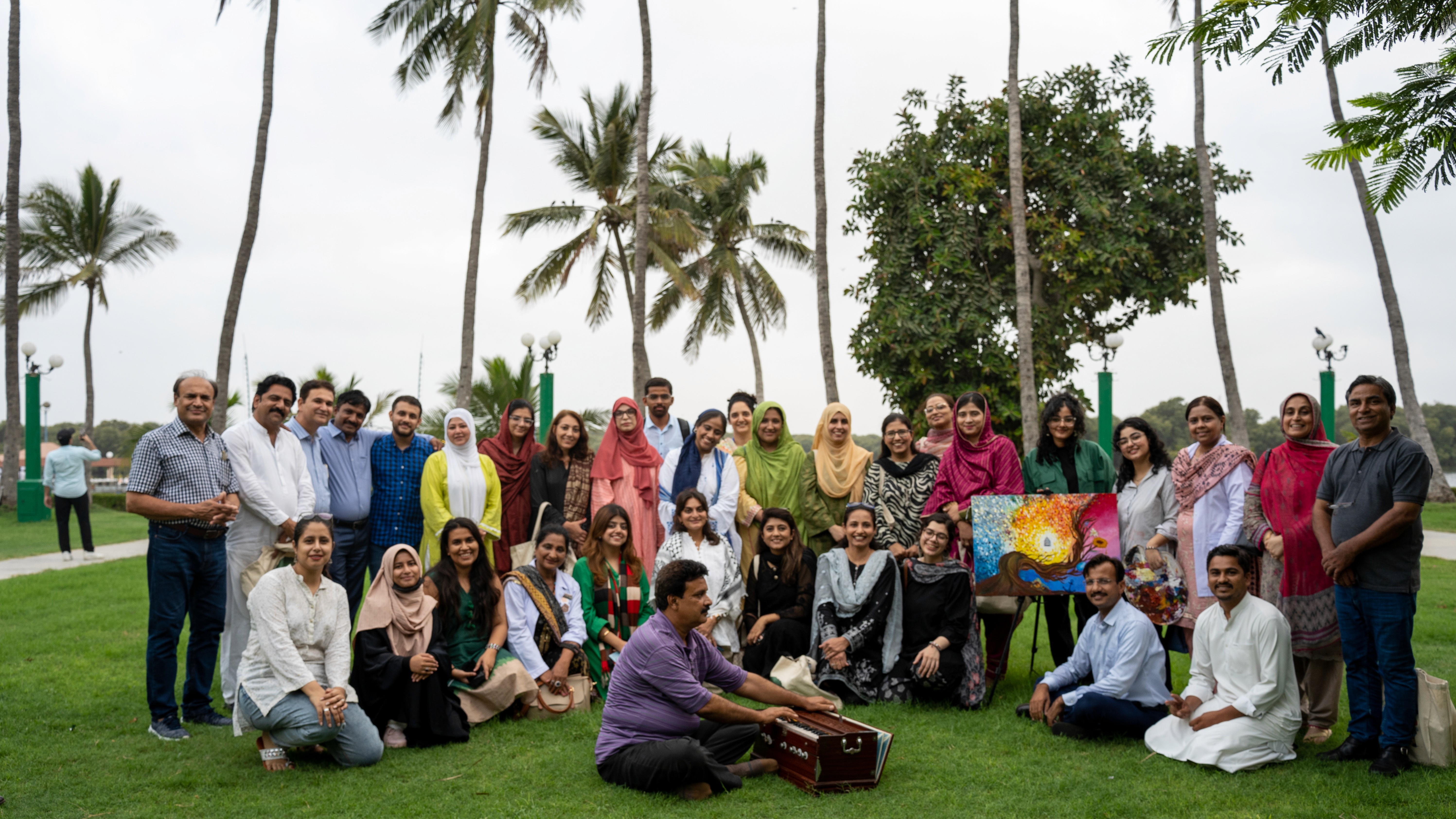
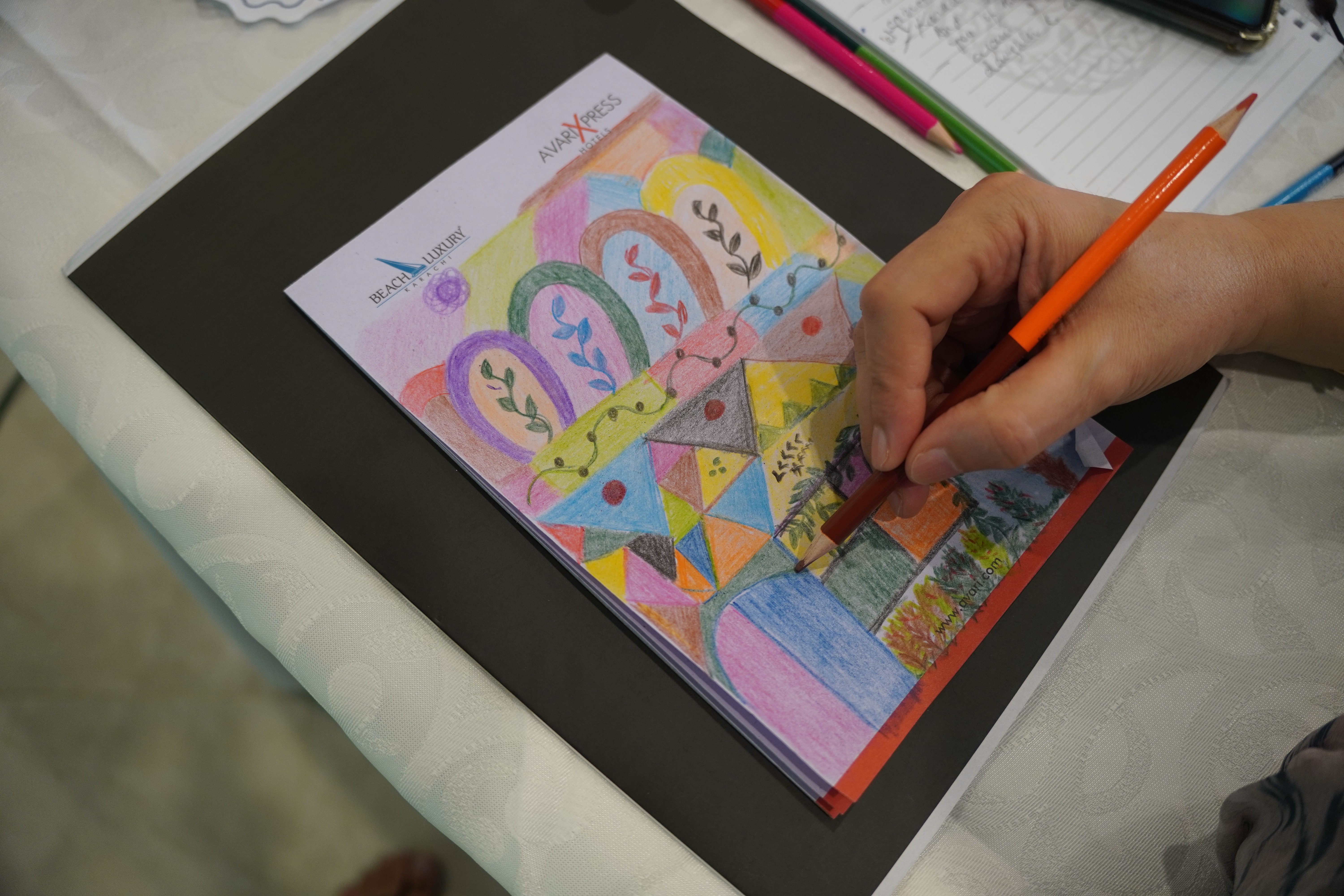
Centre for Arts Based Methodologies is a non-for-profit organization based in Pakistan. Established in 2020 as an initiative by PHC Global, we use participatory and arts-based methodologies to benefit the wellbeing of individuals, communities, organizations & the environment. Our multidisciplinary team include artists, health professionals, researchers and academics who work collaboratively to develop and implement interventions, curricula and community-based programs, and to create community based safe and brave spaces.
Centre for Arts Based Methodologies is a non-for-profit organization based in Pakistan. Established in 2020 as an initiative by PHC Global, we use participatory and arts-based methodologies to benefit the wellbeing of individuals, communities, organizations & the environment. Our multidisciplinary team include artists, health professionals, researchers and academics who work collaboratively to develop and implement interventions, curricula and community-based programs, and to create community based safe and brave spaces.
Our Mandate
CFAW’s mandate is to utilize arts-based and participatory methodologies to foster psychosocial wellbeing, build community resilience, and create safe, inclusive, and brave spaces for reflection, expression, and healing. The organization is committed to enhancing the capacities of caregivers, educators, frontline workers, youth, and community members through creative processes that cultivate emotional literacy, strengthen agency, and encourage collaborative problem-solving. CFAW also works to generate evidence, develop contextually grounded curricula, and support systems with tools that center dignity, empathy, and voice.
CFAW’s mandate is to utilize arts-based and participatory methodologies to foster psychosocial wellbeing, build community resilience, and create safe, inclusive, and brave spaces for reflection, expression, and healing. The organization is committed to enhancing the capacities of caregivers, educators, frontline workers, youth, and community members through creative processes that cultivate emotional literacy, strengthen agency, and encourage collaborative problem-solving. CFAW also works to generate evidence, develop contextually grounded curricula, and support systems with tools that center dignity, empathy, and voice.
Our Vision
Its mission is to harness the transformative power of creativity and collective expression to
promote holistic wellbeing and social connection. CFAW designs and delivers interventions, trainings, and community programs that expand opportunities for dialogue, reduce stigma, and enable individuals and groups to address trauma, stress, and social barriers in culturally meaningful ways. Through interdisciplinary collaboration, CFAW blends the strengths of the arts, mental health, community development, public health, and education sectors to co-create pathways for healing and empowerment.
Its mission is to harness the transformative power of creativity and collective expression to
promote holistic wellbeing and social connection. CFAW designs and delivers interventions, trainings, and community programs that expand opportunities for dialogue, reduce stigma, and enable individuals and groups to address trauma, stress, and social barriers in culturally meaningful ways. Through interdisciplinary collaboration, CFAW blends the strengths of the arts, mental health, community development, public health, and education sectors to co-create pathways for healing and empowerment.
GOVERNANCE
AND ETHICS
GOVERNANCE
AND ETHICS
The Centre for Arts-Based Methodologies & Wellbeing (CFAW) operates through a values-
driven governance structure that upholds ethical practice, organizational transparency, and
high-quality implementation across all programs. Guided by its mandate to create safe,
inclusive, and creative spaces for wellbeing, CFAW’s governance system ensures that
decision-making, staff conduct, and operational processes align with its core principles of
dignity, safety, co-creation, and community-centered engagement.
Through this integrated governance structure—combining ethical rigor, strong policies,
participatory leadership, and clear accountability—CFAW ensures that its work remains
mission-aligned, inclusive, safe, and effectively managed across all levels of the organization.
The Centre for Arts-Based Methodologies & Wellbeing (CFAW) operates through a values-
driven governance structure that upholds ethical practice, organizational transparency, and
high-quality implementation across all programs. Guided by its mandate to create safe,
inclusive, and creative spaces for wellbeing, CFAW’s governance system ensures that
decision-making, staff conduct, and operational processes align with its core principles of
dignity, safety, co-creation, and community-centered engagement.
Through this integrated governance structure—combining ethical rigor, strong policies,
participatory leadership, and clear accountability—CFAW ensures that its work remains
mission-aligned, inclusive, safe, and effectively managed across all levels of the organization.
Policies and Structure
The organizational governance framework is reinforced by a comprehensive suite of internal
policies that set clear expectations for conduct, performance, and responsibility. These
include the Code of Conduct, Code of Ethics, Anti-Fraud Policy, Policy Against Harassment
and Discrimination, Diversity and Inclusion Policy, Moonlighting Policy, and Intellectual
Property Policy. Together, these policies establish standards for ethical behavior,
confidentiality, resource protection, professionalism, non-discrimination, and accountability.
They ensure staff operate in a safe, respectful, and integrity-driven environment, reflective of
CFAW’s foundational manifesto and commitment to creating safe and brave spaces.
The organizational governance framework is reinforced by a comprehensive suite of internal
policies that set clear expectations for conduct, performance, and responsibility. These
include the Code of Conduct, Code of Ethics, Anti-Fraud Policy, Policy Against Harassment
and Discrimination, Diversity and Inclusion Policy, Moonlighting Policy, and Intellectual
Property Policy. Together, these policies establish standards for ethical behavior,
confidentiality, resource protection, professionalism, non-discrimination, and accountability.
They ensure staff operate in a safe, respectful, and integrity-driven environment, reflective of
CFAW’s foundational manifesto and commitment to creating safe and brave spaces.
Accountability at its Core
CFAW’s governance structure embeds strong accountability systems. The Ethics Committee
and Anti-Fraud Committee—comprising senior leadership—oversee compliance, address
complaints, investigate misconduct, and ensure fair, transparent outcomes. Whistleblower
protections, clear reporting channels, and anti-retaliation measures safeguard employees and
community participants, reinforcing trust in organizational processes. Supervisors and
managers are responsible for ensuring that staff adhere to policies, maintain confidentiality,
and uphold the organization’s standards of ethical and trauma-informed practice.
CFAW’s governance structure embeds strong accountability systems. The Ethics Committee
and Anti-Fraud Committee—comprising senior leadership—oversee compliance, address
complaints, investigate misconduct, and ensure fair, transparent outcomes. Whistleblower
protections, clear reporting channels, and anti-retaliation measures safeguard employees and
community participants, reinforcing trust in organizational processes. Supervisors and
managers are responsible for ensuring that staff adhere to policies, maintain confidentiality,
and uphold the organization’s standards of ethical and trauma-informed practice.
Diverse and Participatory
The organization’s commitment to diversity and inclusion further shapes its governance
approach. Recruitment, promotions, and workplace practices reflect an inclusive ethos that
values diverse identities, abilities, experiences, and cultural backgrounds. This commitment
strengthens CFAW’s capacity to work sensitively with communities and supports a workplace
culture rooted in empathy, respect, and collaboration.
CFAW’s governance model is participatory at its core. While leadership provides direction,
staff contribute to shaping program design, research methodologies, community engagement
strategies, and creative interventions. This encourages collective ownership, transparent
communication, and shared responsibility, ensuring that governance is not only top-down but
also community- and staff-responsive.
The organization’s commitment to diversity and inclusion further shapes its governance
approach. Recruitment, promotions, and workplace practices reflect an inclusive ethos that
values diverse identities, abilities, experiences, and cultural backgrounds. This commitment
strengthens CFAW’s capacity to work sensitively with communities and supports a workplace
culture rooted in empathy, respect, and collaboration.
CFAW’s governance model is participatory at its core. While leadership provides direction,
staff contribute to shaping program design, research methodologies, community engagement
strategies, and creative interventions. This encourages collective ownership, transparent
communication, and shared responsibility, ensuring that governance is not only top-down but
also community- and staff-responsive.
POLICY 01:
Safety against Sexual Exploitation & Abuse:
POLICY 01:
Safety against Sexual Exploitation & Abuse:
CFAW has clear, organization-wide mechanisms that safeguard beneficiaries from violations,
abuse, and especially sexual exploitation and abuse (SEA). These mechanisms are grounded
in its commitment to creating safe, inclusive, and non-discriminatory spaces, as articulated in
its Manifesto and core policies.
First, CFAW enforces a strict zero-tolerance policy for all forms of harassment, abuse,
discrimination, and sexual misconduct. The Policy Against Workplace Harassment and
Discrimination explicitly prohibits sexual harassment—including unwelcome advances,
requests for sexual favors, and any verbal or physical conduct of a sexual nature—and
commits the organization to ensuring safe environments across all work-related settings. It
outlines clear reporting channels to supervisors or the HR Manager, guarantees
confidentiality, and mandates prompt investigation and disciplinary action, up to termination.
Retaliation against those who report abuse is expressly prohibited, reinforcing a culture of
protection and trust.
Second, CFAW’s broader safeguarding ecosystem strengthens SEA protection through
multiple reinforcing mechanisms. The Code of Ethics and Code of Conduct define ethical
expectations, prohibit exploitation, require integrity in all interactions, and encourage staff to
report unethical behavior without fear. The Anti-Fraud Policy includes whistleblower
protections, ensuring individuals who report wrongdoing are shielded from dismissal,
suspension, or penalties—protections that extend to reporting abuse or misconduct. Together
with strong commitments to diversity, inclusion, confidentiality, and safe-space creation
embedded throughout organizational policies, these measures create a robust framework that
prioritizes beneficiary dignity, prevents abuse, and ensures accountability when violations
occur.
CFAW has clear, organization-wide mechanisms that safeguard beneficiaries from violations,
abuse, and especially sexual exploitation and abuse (SEA). These mechanisms are grounded
in its commitment to creating safe, inclusive, and non-discriminatory spaces, as articulated in
its Manifesto and core policies.
First, CFAW enforces a strict zero-tolerance policy for all forms of harassment, abuse,
discrimination, and sexual misconduct. The Policy Against Workplace Harassment and
Discrimination explicitly prohibits sexual harassment—including unwelcome advances,
requests for sexual favors, and any verbal or physical conduct of a sexual nature—and
commits the organization to ensuring safe environments across all work-related settings. It
outlines clear reporting channels to supervisors or the HR Manager, guarantees
confidentiality, and mandates prompt investigation and disciplinary action, up to termination.
Retaliation against those who report abuse is expressly prohibited, reinforcing a culture of
protection and trust.
Second, CFAW’s broader safeguarding ecosystem strengthens SEA protection through
multiple reinforcing mechanisms. The Code of Ethics and Code of Conduct define ethical
expectations, prohibit exploitation, require integrity in all interactions, and encourage staff to
report unethical behavior without fear. The Anti-Fraud Policy includes whistleblower
protections, ensuring individuals who report wrongdoing are shielded from dismissal,
suspension, or penalties—protections that extend to reporting abuse or misconduct. Together
with strong commitments to diversity, inclusion, confidentiality, and safe-space creation
embedded throughout organizational policies, these measures create a robust framework that
prioritizes beneficiary dignity, prevents abuse, and ensures accountability when violations
occur.
POLICY 02:
Anti Fraud
POLICY 02:
Anti Fraud
CFAW has a comprehensive system of policies and procedures designed to prevent, detect,
and respond to fraud, corruption, and unethical behavior. Central to this is its Anti-Fraud
Policy, which outlines clear responsibilities for all staff, partners, and grantees to uphold
honesty, integrity, and proper stewardship of organizational resources. The policy mandates
adherence to internal controls, requires immediate reporting of suspected fraud or
misappropriation to HR or supervisors, and guarantees confidential, impartial investigations
conducted by the HR Manager and the Anti-Fraud Committee. Confirmed violations result in
disciplinary actions ranging from warnings to termination, and—when
necessary—coordination with legal authorities. The policy also includes strong whistle-
blower protections, ensuring individuals who report suspicions in good faith are shielded
from retaliation.
These mechanisms are reinforced by CFAW’s Code of Ethics and Code of Conduct, which set
expectations for integrity, conflict-of-interest disclosure, and ethical business practices.
Employees are required to maintain confidentiality, avoid misuse of organizational resources,
and report any unethical conduct to supervisors, HR, or the Ethics Committee. Additional
policies—such as those governing payments, use of resources, and intellectual
property—further reduce opportunities for fraud or corruption by ensuring transparency,
proper documentation, and accountability in financial and operational processes. Together,
these policies create a cohesive, organization-wide framework that safeguards against
unethical behavior and promotes a culture of accountability and integrity.
CFAW has a comprehensive system of policies and procedures designed to prevent, detect,
and respond to fraud, corruption, and unethical behavior. Central to this is its Anti-Fraud
Policy, which outlines clear responsibilities for all staff, partners, and grantees to uphold
honesty, integrity, and proper stewardship of organizational resources. The policy mandates
adherence to internal controls, requires immediate reporting of suspected fraud or
misappropriation to HR or supervisors, and guarantees confidential, impartial investigations
conducted by the HR Manager and the Anti-Fraud Committee. Confirmed violations result in
disciplinary actions ranging from warnings to termination, and—when
necessary—coordination with legal authorities. The policy also includes strong whistle-
blower protections, ensuring individuals who report suspicions in good faith are shielded
from retaliation.
These mechanisms are reinforced by CFAW’s Code of Ethics and Code of Conduct, which set
expectations for integrity, conflict-of-interest disclosure, and ethical business practices.
Employees are required to maintain confidentiality, avoid misuse of organizational resources,
and report any unethical conduct to supervisors, HR, or the Ethics Committee. Additional
policies—such as those governing payments, use of resources, and intellectual
property—further reduce opportunities for fraud or corruption by ensuring transparency,
proper documentation, and accountability in financial and operational processes. Together,
these policies create a cohesive, organization-wide framework that safeguards against
unethical behavior and promotes a culture of accountability and integrity.
POLICY 03:
High Risk Mitigation Strengthening
POLICY 03:
High Risk Mitigation Strengthening
CFAW’s ability to operate in high-risk security environments is grounded in its strong
governance systems, comprehensive organizational policies, and culture of safety and
accountability. The organization’s ethical infrastructure—anchored in its Code of Conduct,
Code of Ethics, Anti-Fraud Policy, Diversity and Inclusion Policy, and Anti-Harassment
Policy—establishes clear behavioral standards, mandatory reporting channels, and strict zero-
tolerance measures for misconduct. These safeguards ensure that staff and beneficiaries are
protected, and that programs maintain integrity even in volatile or sensitive contexts.
CFAW’s work is further strengthened by its commitment to creating safe, participatory, and
trauma-informed spaces, allowing the organization to build trust and maintain access in
communities experiencing fragility, social tension, or limited institutional support. Rigorous
HR and administrative procedures—including thorough vetting, confidentiality protections,
and whistleblower safeguards—ensure staff deployed in challenging environments adhere to
the highest standards of safety, ethics, and professionalism.
The organization’s internal systems also equip it with the agility required to scale up rapidly
during emergencies. Clear protocols for incident reporting, internal communication, and
documentation, along with designated oversight bodies such as the Anti-Fraud Committee
and HR leadership, support fast decision-making, coordinated action, and continuity of
operations. These mechanisms allow CFAW to mobilize resources quickly, adapt
programming, and maintain accountability while expanding activities under pressure.
Combined with its participatory, community-centered methodologies, CFAW is able to
deliver responsive, culturally grounded, and safe interventions during crises or sudden
escalations in need.
CFAW’s ability to operate in high-risk security environments is grounded in its strong
governance systems, comprehensive organizational policies, and culture of safety and
accountability. The organization’s ethical infrastructure—anchored in its Code of Conduct,
Code of Ethics, Anti-Fraud Policy, Diversity and Inclusion Policy, and Anti-Harassment
Policy—establishes clear behavioral standards, mandatory reporting channels, and strict zero-
tolerance measures for misconduct. These safeguards ensure that staff and beneficiaries are
protected, and that programs maintain integrity even in volatile or sensitive contexts.
CFAW’s work is further strengthened by its commitment to creating safe, participatory, and
trauma-informed spaces, allowing the organization to build trust and maintain access in
communities experiencing fragility, social tension, or limited institutional support. Rigorous
HR and administrative procedures—including thorough vetting, confidentiality protections,
and whistleblower safeguards—ensure staff deployed in challenging environments adhere to
the highest standards of safety, ethics, and professionalism.
The organization’s internal systems also equip it with the agility required to scale up rapidly
during emergencies. Clear protocols for incident reporting, internal communication, and
documentation, along with designated oversight bodies such as the Anti-Fraud Committee
and HR leadership, support fast decision-making, coordinated action, and continuity of
operations. These mechanisms allow CFAW to mobilize resources quickly, adapt
programming, and maintain accountability while expanding activities under pressure.
Combined with its participatory, community-centered methodologies, CFAW is able to
deliver responsive, culturally grounded, and safe interventions during crises or sudden
escalations in need.
Our Pillars
Organizational Project Management Approach
Our Pillars
Organizational Project Management Approach
CFAW’s project management approach integrates globally recognized standards with its
participatory, arts-based, and trauma-informed methodologies to ensure ethical, context-
responsive, and impactful programming. Each project begins with a rigorous design and
inception phase grounded in community participation. Through contextual analysis,
stakeholder mapping, and co-creation workshops, CFAW develops evidence-informed
Theories of Change and structured logical frameworks that reflect local realities, community
aspirations, and the cultural nuances essential for sustainable impact. Arts-based tools—such
as visual mapping, story circles, and embodied inquiry—ensure that project concepts are
shaped by lived experiences rather than external assumptions.
Strong governance and internal controls guide every stage of project implementation.
CFAW’s Code of Ethics, Anti-Fraud and Anti-Harassment Policies, resource management
protocols, and whistleblower protections form the backbone of ethical project delivery. Clear
roles, responsibilities, and decision-making authorities, aligned with PMI-aligned RACI
structures, guarantee operational accountability and transparency. Safeguarding
measures—including conflict-of-interest checks, confidentiality standards, and zero-tolerance
policies—are embedded throughout project workflows, ensuring protection of staff and
beneficiaries, especially within vulnerable or marginalized communities.
Project implementation follows a structured but adaptive framework. Work Breakdown
Structures (WBS), activity plans, and resource tracking systems ensure disciplined execution,
while adaptive management practices enable real-time adjustments based on feedback or
changes in the operating environment. CFAW’s trauma-informed facilitation
principles—rooted in psychological safety, emotional expression, and community
trust—ensure all interventions are sensitive and responsive to participants' wellbeing. Local
actors, educators, youth, and artisans are engaged as co-implementers, strengthening
community ownership and enhancing the cultural relevance of programming.
CFAW uses a robust Monitoring, Evaluation, Accountability, and Learning (MEAL) system
to ensure quality and continuous improvement. Baseline and endline assessments, reflective
journals, facilitator observations, and participatory evaluation tools generate both quantitative
and qualitative evidence of change. Regular feedback loops, including community
consultations and team reflection sessions, inform iterative learning and allow for ongoing
program refinement. Accountability is reinforced through clear reporting mechanisms for
safeguarding concerns, ethical violations, and grievances.
Financial management and administrative leadership ensure transparent and responsible use
of resources. Procurement controls, documentation standards, periodic internal reviews, and
anti-fraud safeguards help maintain donor confidence and reinforce ethical project
stewardship.
CFAW’s approach includes comprehensive risk management procedures, enabling safe and
sustained operations in fragile or high-risk contexts. Risk registers, contingency planning,
crisis communication protocols, and staff safety guidelines support proactive mitigation and
rapid response when conditions shift. These systems also strengthen CFAW’s ability to scale
quickly during emergencies, ensuring continuity of operations and effective mobilization of
resources.
Finally, CFAW embeds knowledge management and sustainability across all projects.
Learning products, digital archives, community toolkits, and capacity-building initiatives
ensure that project outcomes endure beyond the implementation period. Transition and exit
strategies prioritize community-led mechanisms, reinforcing long-term resilience and
continuity.
Through this integrated project management approach—combining global best practices,
ethical governance, local participation, and arts-based innovation—CFAW consistently
delivers high-quality, adaptive, and culturally grounded programs that create meaningful and
lasting impact.
CFAW’s project management approach integrates globally recognized standards with its
participatory, arts-based, and trauma-informed methodologies to ensure ethical, context-
responsive, and impactful programming. Each project begins with a rigorous design and
inception phase grounded in community participation. Through contextual analysis,
stakeholder mapping, and co-creation workshops, CFAW develops evidence-informed
Theories of Change and structured logical frameworks that reflect local realities, community
aspirations, and the cultural nuances essential for sustainable impact. Arts-based tools—such
as visual mapping, story circles, and embodied inquiry—ensure that project concepts are
shaped by lived experiences rather than external assumptions.
Strong governance and internal controls guide every stage of project implementation.
CFAW’s Code of Ethics, Anti-Fraud and Anti-Harassment Policies, resource management
protocols, and whistleblower protections form the backbone of ethical project delivery. Clear
roles, responsibilities, and decision-making authorities, aligned with PMI-aligned RACI
structures, guarantee operational accountability and transparency. Safeguarding
measures—including conflict-of-interest checks, confidentiality standards, and zero-tolerance
policies—are embedded throughout project workflows, ensuring protection of staff and
beneficiaries, especially within vulnerable or marginalized communities.
Project implementation follows a structured but adaptive framework. Work Breakdown
Structures (WBS), activity plans, and resource tracking systems ensure disciplined execution,
while adaptive management practices enable real-time adjustments based on feedback or
changes in the operating environment. CFAW’s trauma-informed facilitation
principles—rooted in psychological safety, emotional expression, and community
trust—ensure all interventions are sensitive and responsive to participants' wellbeing. Local
actors, educators, youth, and artisans are engaged as co-implementers, strengthening
community ownership and enhancing the cultural relevance of programming.
CFAW uses a robust Monitoring, Evaluation, Accountability, and Learning (MEAL) system
to ensure quality and continuous improvement. Baseline and endline assessments, reflective
journals, facilitator observations, and participatory evaluation tools generate both quantitative
and qualitative evidence of change. Regular feedback loops, including community
consultations and team reflection sessions, inform iterative learning and allow for ongoing
program refinement. Accountability is reinforced through clear reporting mechanisms for
safeguarding concerns, ethical violations, and grievances.
Financial management and administrative leadership ensure transparent and responsible use
of resources. Procurement controls, documentation standards, periodic internal reviews, and
anti-fraud safeguards help maintain donor confidence and reinforce ethical project
stewardship.
CFAW’s approach includes comprehensive risk management procedures, enabling safe and
sustained operations in fragile or high-risk contexts. Risk registers, contingency planning,
crisis communication protocols, and staff safety guidelines support proactive mitigation and
rapid response when conditions shift. These systems also strengthen CFAW’s ability to scale
quickly during emergencies, ensuring continuity of operations and effective mobilization of
resources.
Finally, CFAW embeds knowledge management and sustainability across all projects.
Learning products, digital archives, community toolkits, and capacity-building initiatives
ensure that project outcomes endure beyond the implementation period. Transition and exit
strategies prioritize community-led mechanisms, reinforcing long-term resilience and
continuity.
Through this integrated project management approach—combining global best practices,
ethical governance, local participation, and arts-based innovation—CFAW consistently
delivers high-quality, adaptive, and culturally grounded programs that create meaningful and
lasting impact.
Beneficiary Feedback, Co-Design, and Community Integration
Beneficiary Feedback, Co-Design, and Community Integration
CFAW has strong, embedded systems that ensure beneficiaries can meaningfully shape,
influence, and evaluate project activities at every stage of the project cycle. Central to the
organization’s vision of creating safe, expressive, and participatory spaces is a commitment to
co-design, where community members are not passive recipients but active partners in
generating ideas, shaping interventions, and defining success.
From project inception, CFAW conducts community consultations and focus group
discussions (FGDs) with youth, educators, parents, artisans, cultural practitioners, and other
key stakeholders. These engagements serve as platforms for understanding local needs,
contextual challenges, cultural nuances, and expectations. Through arts-based inquiry
tools—such as story mapping, emotional mapping, visual co-creation, and embodied
practices—beneficiaries express insights that shape the Theory of Change, activity design,
and implementation strategies. This participatory co-design process ensures that programs are
culturally grounded, informed by lived realities, and aligned with CFAW’s mission to foster
spaces of wellbeing, expression, and collective reflection.
During implementation, CFAW maintains multiple, accessible feedback mechanisms to
uphold accountability and deepen community integration. Regular FGDs, reflective circles,
community feedback sessions, and participatory review meetings allow beneficiaries to share
experiences, surface concerns, and suggest adjustments. Facilitators document qualitative
insights through field notes, reflective journals, and digital recordings, which feed into
adaptive management processes. Additionally, clear and confidential reporting
channels—aligned with CFAW’s safeguarding and ethical policies—allow community
members to raise grievances, share concerns, or suggest improvements without fear of
retaliation.
CFAW’s commitment to long-term monitoring ensures that feedback continues beyond
immediate project cycles. Community advisory groups, follow-up FGDs, arts-based
evaluation sessions, and participatory storytelling activities support ongoing assessment of
project outcomes, strengthening sustainability and local ownership. These long-term
mechanisms enable communities to remain co-authors of program evolution and guardians of
continued impact.
By integrating beneficiary voice through co-design, continuous feedback, and sustained
community engagement, CFAW reinforces its organizational vision: to create inclusive, safe,
expressive spaces where communities sense, explore, reflect, and create freely. This approach
ensures that projects not only respond to community needs but evolve with them, cultivating
lasting relationships and meaningful, community-driven change.
CFAW has strong, embedded systems that ensure beneficiaries can meaningfully shape,
influence, and evaluate project activities at every stage of the project cycle. Central to the
organization’s vision of creating safe, expressive, and participatory spaces is a commitment to
co-design, where community members are not passive recipients but active partners in
generating ideas, shaping interventions, and defining success.
From project inception, CFAW conducts community consultations and focus group
discussions (FGDs) with youth, educators, parents, artisans, cultural practitioners, and other
key stakeholders. These engagements serve as platforms for understanding local needs,
contextual challenges, cultural nuances, and expectations. Through arts-based inquiry
tools—such as story mapping, emotional mapping, visual co-creation, and embodied
practices—beneficiaries express insights that shape the Theory of Change, activity design,
and implementation strategies. This participatory co-design process ensures that programs are
culturally grounded, informed by lived realities, and aligned with CFAW’s mission to foster
spaces of wellbeing, expression, and collective reflection.
During implementation, CFAW maintains multiple, accessible feedback mechanisms to
uphold accountability and deepen community integration. Regular FGDs, reflective circles,
community feedback sessions, and participatory review meetings allow beneficiaries to share
experiences, surface concerns, and suggest adjustments. Facilitators document qualitative
insights through field notes, reflective journals, and digital recordings, which feed into
adaptive management processes. Additionally, clear and confidential reporting
channels—aligned with CFAW’s safeguarding and ethical policies—allow community
members to raise grievances, share concerns, or suggest improvements without fear of
retaliation.
CFAW’s commitment to long-term monitoring ensures that feedback continues beyond
immediate project cycles. Community advisory groups, follow-up FGDs, arts-based
evaluation sessions, and participatory storytelling activities support ongoing assessment of
project outcomes, strengthening sustainability and local ownership. These long-term
mechanisms enable communities to remain co-authors of program evolution and guardians of
continued impact.
By integrating beneficiary voice through co-design, continuous feedback, and sustained
community engagement, CFAW reinforces its organizational vision: to create inclusive, safe,
expressive spaces where communities sense, explore, reflect, and create freely. This approach
ensures that projects not only respond to community needs but evolve with them, cultivating
lasting relationships and meaningful, community-driven change.
Financial Practices
Financial Practices
CFAW maintains a strong financial management system grounded in transparency,
accountability, and international nonprofit best practices. The organization implements robust
internal controls, including written financial policies, dual signatories on payments, restricted
access to financial records, and secure storage systems to prevent misuse of assets. A clear
fund accounting structure separates restricted donor funds from unrestricted resources,
ensuring full compliance with donor requirements and accurate tracking of project
expenditures.
Budgeting and forecasting tools are used to monitor real-time spending, prevent
overspending, and guide strategic financial planning. Segregation of duties across
authorization, payment processing, recordkeeping, and reconciliation reduces risk and
strengthens internal accountability. CFAW produces regular financial statements—such as
income reports, balance sheets, and grant expenditure summaries—for leadership, the Board,
and donors, reinforcing a culture of transparency and informed decision-making.
To enhance efficiency and scalability, CFAW utilizes modern financial software solutions
appropriate to organizational needs, including platforms such as QuickBooks for Nonprofits.
CFAW follows accrual accounting standards to ensure accurate financial representation and
conducts periodic financial reviews with senior management and the Board to maintain
oversight and alignment with strategic goals. Through these strengthened controls, digital
systems, and consistent oversight practices, CFAW ensures responsible stewardship of
resources and sustained trust with communities, partners, and donors.
CFAW maintains a strong financial management system grounded in transparency,
accountability, and international nonprofit best practices. The organization implements robust
internal controls, including written financial policies, dual signatories on payments, restricted
access to financial records, and secure storage systems to prevent misuse of assets. A clear
fund accounting structure separates restricted donor funds from unrestricted resources,
ensuring full compliance with donor requirements and accurate tracking of project
expenditures.
Budgeting and forecasting tools are used to monitor real-time spending, prevent
overspending, and guide strategic financial planning. Segregation of duties across
authorization, payment processing, recordkeeping, and reconciliation reduces risk and
strengthens internal accountability. CFAW produces regular financial statements—such as
income reports, balance sheets, and grant expenditure summaries—for leadership, the Board,
and donors, reinforcing a culture of transparency and informed decision-making.
To enhance efficiency and scalability, CFAW utilizes modern financial software solutions
appropriate to organizational needs, including platforms such as QuickBooks for Nonprofits.
CFAW follows accrual accounting standards to ensure accurate financial representation and
conducts periodic financial reviews with senior management and the Board to maintain
oversight and alignment with strategic goals. Through these strengthened controls, digital
systems, and consistent oversight practices, CFAW ensures responsible stewardship of
resources and sustained trust with communities, partners, and donors.